
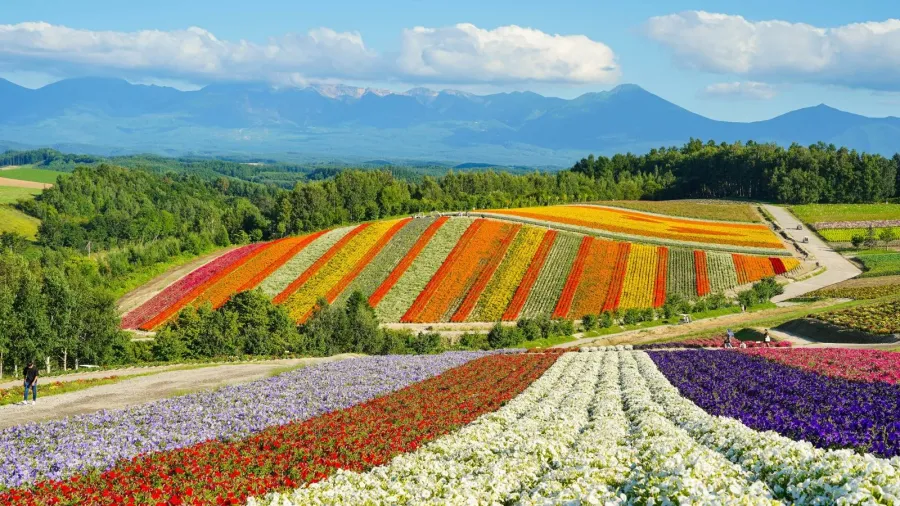
Hokkaido offers dramatic landscapes, pristine nature and unique local culture. This guide lists 10 must-see destinations with reasons to visit, cultural or scientific context and practical information to plan your trip.
1. Sapporo
Why visit
Sapporo offers a rare balance in Japan between nature, modernity, and accessibility. The city is particularly attractive in winter thanks to the Sapporo Snow Festival, but remains pleasant all year round with its wide open avenues and parks such as Odori. It is also a major gastronomic destination: miso ramen, seafood from Hokkaidō, and local specialties that are difficult to find elsewhere in Japan.
Cultural and historical notes
Sapporo is a “young” city, developed in the 19th century during the Meiji era with a strong Western influence in its urban planning. It is part of the history of the colonization of Hokkaidō and the integration of the Ainu people. This dual influence – modern Japanese and indigenous heritage – still shapes the cultural identity of the region today. See the official tourism page for events.
Practical info
- From New Chitose Airport: 40–50 minutes by JR train, roughly ¥1,150–1,500.
- Highlights: Odori Park, Sapporo Clock Tower, Sapporo Beer Museum.
2. Otaru
Why visit
Otaru is a small port city with a charm very different from the rest of Japan. Its canal lined with former warehouses, its quiet streets, and its artisan shops make it an aesthetic and peaceful stop. It is also renowned for its sushi and seafood, often considered among the best on the island.
Historical context
Otaru prospered in the late 19th and early 20th centuries as a major commercial port of Hokkaidō. Its architecture preserves Western influences visible in its stone buildings. The city later shifted toward tourism and craftsmanship, notably glasswork and music boxes, which have become local cultural symbols.
Practical info
- Train Sapporo–Otaru: 30–40 minutes, ¥720–1,140.
- Stroll the canal, visit glass studios and sample seafood
3. Furano (lavender fields)
Why visit
Furano is world-famous for its lavender fields in summer, particularly around Farm Tomita. The landscapes are very different from typical Japan, with open hills reminiscent of Europe. It is a strong seasonal destination, ideal for photography and rural atmospheres.
Historical and cultural context
Furano’s agriculture developed after the colonization of Hokkaidō, with crops adapted to the cool climate. Lavender was introduced in the 20th century, initially for the production of essential oils. Today, it has become a tourist symbol, illustrating the transformation of an agricultural economy into a structured tourist destination.
Practical info
- Sapporo–Furano: 2–2.5 hours by Limited Express, approx. ¥4,000–6,000.
- Best time: July for lavender. to be read: Info
4. Biei & the Blue Pond (Aoi-ike)
Why visit
Biei is known for its rolling agricultural landscapes, often called “patchwork hills.” The Blue Pond is one of the most photographed natural sites in Japan, with its unusual turquoise color. Together, they offer a visual experience very different from urban or mountainous Japan.
Scientific note
Like Furano, Biei originates from the agricultural development of Hokkaidō in the modern era. The Blue Pond is actually a relatively recent phenomenon, created following volcanic mudflow prevention works. It illustrates the relationship between nature, human activity, and landscape transformation in this region.
Practical info
- From Asahikawa: 40–50 minutes by car.
- Blue Pond has free access, paid parking in high season.
5. Asahiyama Zoo (Asahikawa)
Why visit
The Asahiyama Zoo is considered one of the most innovative zoos in Japan. It offers immersive facilities that allow visitors to observe animals in conditions close to their natural behavior, notably the famous penguin walks in winter.
Educational context
Located in Asahikawa, this zoo was revived in the 1990s thanks to an approach focused on animal welfare and public education. It reflects a shift in attitudes in Japan toward a better understanding of wildlife and a more educational approach to animal parks.
Practical info
- Sapporo–Asahikawa: 1.5–2 hours by Limited Express, approx. ¥5,000–6,000.
- Admission: around ¥1,000–1,700 depending on season.
6. Daisetsuzan National Park
Why visit
The Daisetsuzan National Park is the largest national park in Japan. It offers alpine, volcanic, and wild landscapes, with accessible or more demanding hikes. It is one of the best places in Japan to observe early autumn colors and a nature that remains relatively untouched by urbanization.
Scientific note
Daisetsuzan means “great snowy mountains.” This territory was long used by the Ainu people for hunting and rituals. Today, it is protected as a major natural area, symbolizing the wild dimension of Hokkaidō, very different from the more densely populated parts of Japan. Daisetsuzan contains unique subalpine ecosystems and peaks over 2,000 m, important for alpine ecology studies.
Practical info
- From Sapporo: transfer via Asahikawa, total 3–4 hours by public transport.
- Hiking routes range from 2–8 hours.
7. Shiretoko Peninsula (UNESCO World Heritage)
Why visit
The Shiretoko Peninsula is one of the most preserved regions in Japan. Listed as a World Heritage Site by the UNESCO, it offers raw nature with cliffs, forests, wildlife (bears, deer), and drift ice in winter. The experience is close to a subarctic environment.
Conservation and science
Shiretoko remained isolated and difficult to access for a long time, which allowed the conservation of its ecosystems. It is also linked to Ainu culture, for which nature holds a strong spiritual dimension. Its UNESCO recognition highlights its ecological importance on a global scale.
Practical info
- Sapporo–Shiretoko (Utoro): combined train and bus 7–9 hours, or fly to Memanbetsu then bus 1–2 hours.
- Wildlife cruises: ¥4,000–8,000 depending on season.
8. Niseko
Why visit
Niseko is an internationally renowned ski destination, known for its exceptional powder snow. In winter, it attracts a global clientele. In summer, the region becomes a hub for outdoor activities (hiking, rafting).
Cultural note
Niseko’s development is relatively recent, with strong internationalization, particularly from Australia. Mount Yotei, often compared to Mount Fuji, shapes the visual identity of the region. Niseko illustrates the integration of Hokkaidō into global tourism. Since the 1990s Niseko has developed an international ski culture, blending global resort amenities with local Hokkaido traditions.
Practical info
- Sapporo–Niseko: 2–3 hours by train plus bus, or about 2 hours by car. Fare range ¥3,000–6,000.
- Ski season: December–March.
9. Hakodate
Why visit
Hakodate is famous for one of the most beautiful night views in Japan from Mount Hakodate. The city combines seafood markets, historical architecture, and a port atmosphere.
Historical context
Hakodate was one of the first Japanese ports opened to foreigners in the 19th century, which explains its strong Western influences. The Goryokaku, a star-shaped fort, reflects the conflicts at the end of the feudal era and the transition to modern Japan.
Practical info
- Sapporo–Hakodate: 3.5–4 hours by Limited Express, approx. ¥8,000–10,000.
- Take the ropeway up Mount Hakodate at night and visit Hakodate Morning Market.
10. Lake Toya and the Toya-Usu Geopark
Why visit
The Lake Toya is a volcanic lake surrounded by spectacular landscapes. The region is known for its hot springs (onsen) and its summer fireworks. The Toya-Usu Geopark allows visitors to understand the active volcanic activity of the area.
Scientific note
The lake is located in a caldera formed by ancient eruptions, while Mount Usu remains active. The region is an example of coexistence between human populations and a volcanic environment. It is recognized as a geopark for its scientific and educational value.
Practical info
- Sapporo–Lake Toya: about 2 hours by train plus bus, or 2 hours by car.
- Onsen, lake cruises and volcano observatories available.
Practical tips for visiting Hokkaido
- Best seasons: June–September for flowers and hiking, December–March for skiing and snow festivals.
- Getting around: JR Hokkaido covers main routes, buses and rental cars are recommended for rural areas. Consider Japan Rail passes if travelling long distances. (https://www.japanrailpass.net/)
- Budget estimates: intercity transport ¥3,000–10,000 per leg, meals ¥800–3,000, hotels ¥5,000–25,000 per night depending on class.
- Respect nature: stay on marked trails, do not feed wildlife and follow local waste sorting rules.
Conclusion
From vibrant Sapporo to remote Shiretoko and volcanic Lake Toya, Hokkaido delivers diverse landscapes, cultural depth and scientific interest. Use the official links above to check schedules and bookings, and adapt your itinerary to the season for the best experience.
Sources and useful links
- Japan National Tourism Organization (JNTO): https://www.japan.travel/en/
- Hokkaido Tourism Organization: https://www.visit-hokkaido.jp/
- UNESCO World Heritage, Shiretoko: https://whc.unesco.org/en/list/1193
- Daisetsuzan (Ministry of the Environment, Japan): https://www.env.go.jp/en/nature/nps/park/daisetsuzan/
- Toya-Usu Global Geopark (UNESCO): https://en.unesco.org/global-geoparks/toya-usu
- Asahiyama Zoo: https://www.city.asahikawa.hokkaido.jp/asahiyamazoo/english/
Enjoy your trip and the generous wilderness of Hokkaido!