
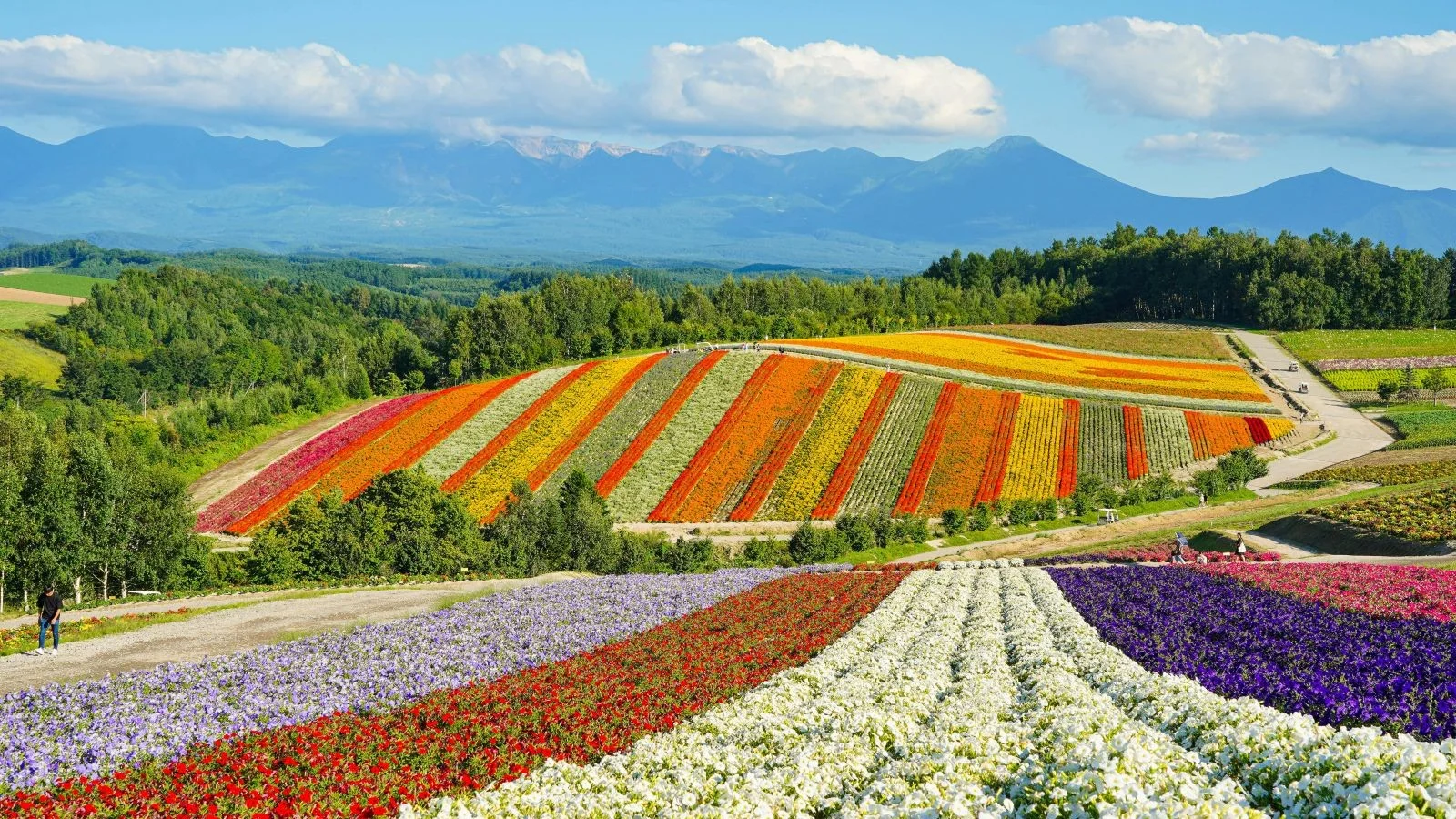
Hokkaido offers dramatic landscapes, pristine nature and unique local culture. This guide lists 10 must-see destinations with reasons to visit, cultural or scientific context and practical information to plan your trip.
1. Sapporo
Why visit
Sapporo is Hokkaido’s modern hub. It mixes festivals, local cuisine (miso ramen, fresh seafood, Sapporo beer) and lively urban parks.
Cultural and historical notes
Developed in the Meiji era (late 19th century) as an administrative center, Sapporo hosts the Snow Festival attracting over a million visitors each February. See the official tourism page for events. (https://www.city.sapporo.jp/kanko/english/)
Practical info
- From New Chitose Airport: 40–50 minutes by JR train, roughly ¥1,150–1,500.
- Highlights: Odori Park, Sapporo Clock Tower, Sapporo Beer Museum (https://www.japan.travel/en/spot/241/).
2. Otaru
Why visit
A picturesque port town 30–40 km from Sapporo, famous for its canal, glassware craftsmen and music boxes.
Historical context
A prosperous 19th-century trading port, its brick warehouses reflect the maritime architecture of the era.
Practical info
- Train Sapporo–Otaru: 30–40 minutes, ¥720–1,140.
- Stroll the canal, visit glass studios and sample seafood. (https://otaru.gr.jp/english/)
3. Furano (lavender fields)
Why visit
Furano is renowned for lavender fields and patchwork farms, ideal in summer for photography and light hikes.
Scientific note
Crop rotation and soil composition contribute to the quality of the lavender fields. Peak bloom is mid-July to August.
Practical info
- Sapporo–Furano: 2–2.5 hours by Limited Express, approx. ¥4,000–6,000.
- Best time: July for lavender. Info: https://www.furano.ne.jp/english/
4. Biei & the Blue Pond (Aoi-ike)
Why visit
Biei’s rolling hills and scenic roads lead to the Blue Pond, a turquoise pool created by volcanic mineral runoff.
Scientific note
The pond’s blue hue comes from colloidal aluminum hydroxide and light scattering, a visible example of volcanic mineral effects on water.
Practical info
- From Asahikawa: 40–50 minutes by car.
- Blue Pond has free access, paid parking in high season. (https://www.japan.travel/en/spot/1917/)
5. Asahiyama Zoo (Asahikawa)
Why visit
Famous for its interactive enclosures and observation tunnels, it lets visitors observe animals like penguins up close.
Educational context
Focus on natural behaviors and environmental enrichment helps public education and conservation awareness.
Practical info
- Sapporo–Asahikawa: 1.5–2 hours by Limited Express, approx. ¥5,000–6,000.
- Admission: around ¥1,000–1,700 depending on season. Official site: https://www.city.asahikawa.hokkaido.jp/asahiyamazoo/english/
6. Daisetsuzan National Park
Why visit
Hokkaido’s largest national park with alpine hikes, hot springs and opportunities to spot wildlife in high-elevation ecosystems.
Scientific note
Daisetsuzan contains unique subalpine ecosystems and peaks over 2,000 m, important for alpine ecology studies.
Practical info
- From Sapporo: transfer via Asahikawa, total 3–4 hours by public transport.
- Hiking routes range from 2–8 hours. Official info: https://www.env.go.jp/en/nature/nps/park/daisetsuzan/
7. Shiretoko Peninsula (UNESCO World Heritage)
Why visit
Wild, remote landscapes, wildlife cruises (bears, sea eagles, seasonal marine life) and dramatic coastal cliffs.
Conservation and science
A UNESCO natural heritage site, Shiretoko exemplifies marine-mountain interactions and hosts endemic and migratory species. (https://whc.unesco.org/en/list/1193)
Practical info
- Sapporo–Shiretoko (Utoro): combined train and bus 7–9 hours, or fly to Memanbetsu then bus 1–2 hours.
- Wildlife cruises: ¥4,000–8,000 depending on season.
8. Niseko
Why visit
World-class powder skiing in winter and mountain biking, hiking and onsens in summer make Niseko a year-round outdoor destination.
Cultural note
Since the 1990s Niseko has developed an international ski culture, blending global resort amenities with local Hokkaido traditions.
Practical info
- Sapporo–Niseko: 2–3 hours by train plus bus, or about 2 hours by car. Fare range ¥3,000–6,000.
- Ski season: December–March. Official: https://www.niseko.ne.jp/en/
9. Hakodate
Why visit
Historic port city in southern Hokkaido, famed for its night view from Mount Hakodate, morning seafood markets and preserved western-style architecture.
Historical context
One of the first ports opened to foreign trade in the Meiji era, Hakodate retains western-influenced buildings and townscapes.
Practical info
- Sapporo–Hakodate: 3.5–4 hours by Limited Express, approx. ¥8,000–10,000.
- Take the ropeway up Mount Hakodate at night and visit Hakodate Morning Market. (https://hakodate.travel/en/)
10. Lake Toya and the Toya-Usu Geopark
Why visit
A scenic caldera lake with island views, boat trips and accessible observation points for the nearby active volcano Mount Usu.
Scientific note
Toya-Usu Global Geopark demonstrates active volcanism and its social management. Recent eruptions (1977, 2000, 2008) offer case studies in volcanic monitoring and risk mitigation. (https://en.unesco.org/global-geoparks/toya-usu)
Practical info
- Sapporo–Lake Toya: about 2 hours by train plus bus, or 2 hours by car.
- Onsen, lake cruises and volcano observatories available. Info: https://www.japan.travel/en/spot/2263/
Practical tips for visiting Hokkaido
- Best seasons: June–September for flowers and hiking, December–March for skiing and snow festivals.
- Getting around: JR Hokkaido covers main routes, buses and rental cars are recommended for rural areas. Consider Japan Rail passes if travelling long distances. (https://www.japanrailpass.net/)
- Budget estimates: intercity transport ¥3,000–10,000 per leg, meals ¥800–3,000, hotels ¥5,000–25,000 per night depending on class.
- Respect nature: stay on marked trails, do not feed wildlife and follow local waste sorting rules.
Conclusion
From vibrant Sapporo to remote Shiretoko and volcanic Lake Toya, Hokkaido delivers diverse landscapes, cultural depth and scientific interest. Use the official links above to check schedules and bookings, and adapt your itinerary to the season for the best experience.
Sources and useful links
- Japan National Tourism Organization (JNTO): https://www.japan.travel/en/
- Hokkaido Tourism Organization: https://www.visit-hokkaido.jp/
- UNESCO World Heritage, Shiretoko: https://whc.unesco.org/en/list/1193
- Daisetsuzan (Ministry of the Environment, Japan): https://www.env.go.jp/en/nature/nps/park/daisetsuzan/
- Toya-Usu Global Geopark (UNESCO): https://en.unesco.org/global-geoparks/toya-usu
- Asahiyama Zoo: https://www.city.asahikawa.hokkaido.jp/asahiyamazoo/english/
Enjoy your trip and the generous wilderness of Hokkaido!