
Northern Vietnam: Historical Heritage and Natural Wonders

Last update: November, 29th 2025
6-day itinerary combining historic sites and rewarding hikes in Northern Vietnam, budget-friendly: shared shuttles/minivans, economical guesthouses/hostels/homestays and must-see highlights: Ninh Binh, Cuc Phuong, Halong Bay and a final Ba Vi hike.
Vietnam: Hanoi, Ninh Binh / Trang An, Ha long Bay, Ba Vi
Day 1 - Acclimatize in Hanoi: markets, monuments and local flavors. Budget lodging in the city's center.
Walk through the Old Quarter
Walk through the shopping alleys, markets and street scenes that are typical of Hanoi. As you wander the Old Quarter, its narrow houses topped by shops, the street vendors and tiny inner courtyards, you immediately feel the city's pulse: the clatter of motorbikes, the scent of fresh herbs and the voices bargaining. Don’t miss the Dong Xuan market or the Long Biên morning market, where trucks are still unloading crates at dawn.
On the food side, it’s the perfect chance to taste Hanoi street food: a bowl of pho for breakfast, clear and fragrant as Northern tradition dictates, or bun cha, the capital’s iconic grilled-meat-and-noodle dish, even popularized during Obama’s 2016 visit, when he was invited by Anthony Bourdain. Between tastings, sit for a few minutes on a tiny plastic stool for a cà phê trứng (egg coffee), a local specialty born in Hanoi, and watch life go by.
Along the walk you’ll also spot useful services for the rest of your trip: agencies, small hotels, bike and motorbike repair shops, and train or bus ticket counters. It’s ultimately the best way to soak up everyday life in Hanoi, indulge in street food (pho, bun cha) and calmly prepare the next stage of your itinerary.
Hoan Kiem Lake & Ngoc Son Temple
Stroll peacefully around Hoàn Kiếm Lake, cross the vermilion Thê Húc Bridge to reach the small Ngọc Sơn Temple on its islet, then let yourself be swept up in local legends—most notably that of King Lê Lợi and the turtle who returned the magic sword—while watching Hanoi residents practice tai chi in the early morning. With the Turtle Tower (Tháp Rùa) rising at the lake’s center, the surrounding colonial façades and the cafés where you can sample the famous cà phê trứng (egg coffee), it’s the perfect introduction to discovering Hanoi.
Temple of Literature (Van Mieu)
An ancient Confucian complex entirely devoted to culture and education: temples, study halls and an academy where elites were once trained. Around it stretch beautiful gardens, shaded walkways and groves ideal for meditation, and above all engraved steles bearing the names of the "doctors," the laureates of the imperial exams, reminders of the central role of education in society.
These places speak loudly of the country’s intellectual history. You often see those steles set on turtle-shaped pedestals (the bixi), symbols of endurance and memory; the inscriptions record generations of exam successes, administrative careers and family hopes. In Hanoi, for example, the Văn Miếu Quốc Tử Giám displays 82 steles on turtle bases, inscribing the names of centuries of doctors and still drawing families who come to take exam photos or leave an offering before the exams. In Qufu, the birthplace of Confucius, the temple and family residence form a monumental ensemble (listed as a World Heritage site) where cedars and pavilions bear the marks of centuries.
Look a little closer and you’ll also catch more human, contemporary scenes: students in kimono or traditional dress posing for photos, calligraphers offering a lucky name on a slip of paper, or tourists who, after the visit, go taste a local specialty, for instance a nearby bowl of phở, as if to extend the cultural experience through the flavors of the place.
In short, these Confucian complexes, through their architecture, gardens and especially their steles, are living witnesses to the country’s intellectual and educational life, blending memory, pedagogy and everyday life.

Photo by Tú Chu on Pexels
Hanoi Old Quarter: A busy street scene in Hanoi with a vendor selling fresh oranges. Fruits are pretty delicious in Vietnam.
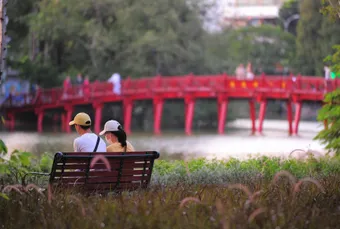
Photo by TUAN PHAN on Pexels
Hoan Kiem Lake: Couple enjoys a peaceful afternoon on a bench by the famous red bridge
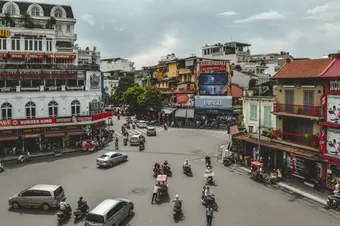
Photo by Josh Stewart on Unsplash
Hanoi old quarter: Crowded streets in center of Hanoi
Day 2 - Day in Ninh Binh: history at Hoa Lu, a serene boat ride among karsts and a dramatic viewpoint at Mua Cave.
Transfer Hanoi → Ninh Binh (morning)
Shared-shuttle or minivan transfer (≈ 2 hours). Set off early to make the most of your day in Ninh Binh, often nicknamed the "Halong Bay on land" for its limestone karsts rising from the rice paddies, where you can boat through the winding waterways of Tam Coc or Trang An (a UNESCO-listed site), visit the temples of the 12th-century former capital Hoa Lu, and climb to the Mua Cave viewpoint for panoramic views. Don’t leave without trying thit dê (local goat meat) and cơm cháy (crispy rice), regional specialties prepared by local families.
Visit Hoa Lu, ancient capital
The ruins of Annam’s ancient capital (10th century), with small temples scattered at the foot of karst pinnacles, provide an ideal backdrop for tracing the region’s historical origins. One often thinks of Hoa Lư, the fortress-city where Đinh Bộ Lĩnh was crowned in 968: the limestone hills served as natural walls, and the modest shrines dedicated to the rulers of the first dynasties tell, through their inscriptions and rituals, the beginnings of a state taking shape.
Wandering among the remains you still hear local anecdotes: the steep paths are said to have served as lookout posts against invaders, the palaces were mostly wooden and have nearly all disappeared, and some altars continue to receive offerings according to customs unchanged for centuries. The surrounding karst landscape, the same type as Tam Cốc or Trang An, adds a striking geographical dimension: drowned valleys, caverns and cliffs that shaped daily life and local defenses. And to complete the experience, taste the local specialties (Ninh Bình mountain goat, the famous crispy “cơm cháy”): they are flavorful clues to the material culture that grew up around this old capital. In short, these ruins and their landscape form a perfect setting for understanding the region’s historical beginnings.
Boat ride in Tam Coc / Trang An
Board a traditional wooden boat rowed by hand and glide peacefully between flooded rice paddies and dramatic karst formations: late in the day the light turns golden, transforming the landscape into a living painting. These wooden craft, used for generations by farmers and fishermen, are often piloted by local boatmen who like to accompany the crossing with songs or stories about the valley. Limestone pinnacles, shaped over millions of years, form astonishing silhouettes and sometimes open onto small caves adorned with mineral formations, a striking contrast to the flat expanse of the paddies. As you move along the water you hear the lap of the oars, the calls of birds and the scent of ripening rice; on arrival it’s not uncommon to taste a rice-based snack prepared by the community. A simple, inexpensive activity, it is run locally and directly supports residents while offering a moment of calm and wonder.
Climb to Mua Cave viewpoint (Hang Mua)
Climb the roughly 500 carved steps to the summit for a spectacular panoramic view over the Tam Coc plain, a short but physically demanding and very photogenic ascent. Tam Coc, which means “three caves,” lies at the heart of rice paddies and limestone karsts often compared to a “landlocked Ha Long Bay”; the viewpoint at the top (the steps are commonly reported as around 486–500 and are cut into the rock) is an ideal spot at sunrise or sunset. Within easy reach are boat trips on the Ngo Dong River and the historic site of Hoa Lu, the ancient capital of Vietnam, and the whole area falls within the Trang An tourist zone (UNESCO-listed). After the climb, be sure to sample local specialties, notably dê núi (mountain goat) or com chay (crispy rice), and wear good shoes and bring water: the ascent is brief but steep.
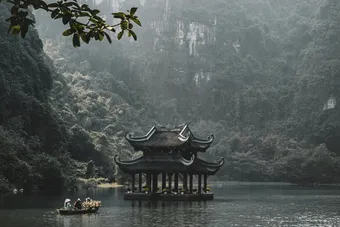
Photo by Karolina on Pexels
Tam Coc: Serene scene of a traditional pagoda on the Tam Coc river in Ninh Bình, surrounded by lush greenery.
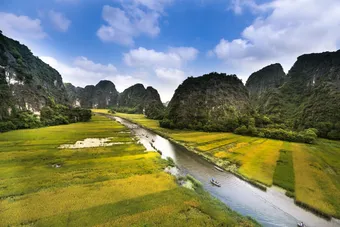
Photo by Quang Nguyen Vinh on Pexels
Ninh Binh karst rice paddies: Explore a tranquil river winding through lush green rice fields and towering karst mountains.
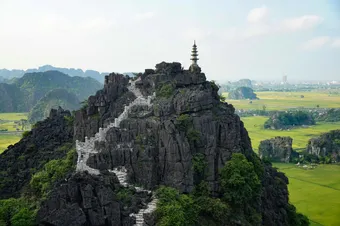
Photo by Catherine Dionne on Unsplash
Ngoa Long Mountain: Famous for its breathtaking views and a large stone dragon sculpture at its summit. The mountain is located in the Mua Cave tourist area and is known for its challenging climb up approximately 500 carved stone steps.
Day 3 - Full day in Cuc Phuong: forest hikes, wildlife conservation center and tranquil natural scenery for hiking enthusiasts.
Day trip to Cuc Phuong National Park
Early start (≈ a 1.5-hour drive) for a day of hiking in the heart of Cúc Phương, often considered Vietnam’s oldest tropical forest. On shaded trails lined with centuries-old trees, you’ll enjoy a habitat teeming with birdlife, plovers, hornbills and other colorful species, and, depending on the itinerary, may visit the Primate Rescue Center, set up in the early 1990s to protect monkeys rescued from the illegal wildlife trade. Several loops are offered (1 to 4 hours) and will be tailored to the group’s energy: gentle walks among ferns and ancient trunks or more strenuous routes through the forest. Local tidbit: Cúc Phương was the country’s first national park and has drawn naturalists and researchers for decades to study its biodiversity and sometimes millennia-old trees. After the hike, it’s not uncommon to sample in a nearby village a simple, rustic dish, like com lam (rice cooked in bamboo), that evokes the cuisine of northern Vietnam.
Explore caves and archaeological sites (in park)
A route for discovering remarkable caves and archaeological remains along the chosen trail. Depending on the region, these cavities may reveal paintings or traces of prehistoric occupation, layers of pottery and tools, or even troglodyte dwellings, all clues that tell the story of the place and sometimes feed local legends (people often speak of fireflies, cave spirits or ancient refuges).
A local guide is strongly recommended: they will explain the geology (karst, stalactites, concretions) and the specific biodiversity of the cavities (cave-dwelling fauna, endemic species, microclimate), and can also share cultural or culinary anecdotes particular to the region, for example where to taste local products after the walk (cheeses, honey, wine, traditional bread) to prolong the discovery.
Return to Tam Coc, evening at leisure
After a day of walking, you return to the village and settle into a small, cozy inn where you dine leisurely, often over fresh seafood or a local specialty like chả mực (calamari pancake), savoring the hushed atmosphere, the scent of smoke and fireside conversation.
The evening is also for preparing what's next: checking tickets and luggage, looking up schedules, and turning in early to set off for Ha Long Bay the next morning. The bay, a World Heritage Site, is famous for its karst pinnacles and its legend, "the bay where the dragon descends", and is all the more rewarding if you arrive there rested and curious.
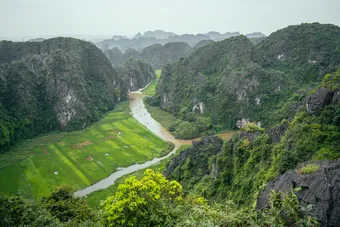
Photo by Ferdinand Stöhr on Unsplash
Mua Cave: A wonderful place where a lot of remarkable caves

Photo by Yen Vu on Unsplash
Cuc Phuong National Park: A great diversity of animals can be observed, especially monkeys
Day 4 - Transfer to Halong and overnight cruise: scenic karsts, caves and the unique floating village experience.
Transfer Ninh Binh → Halong Bay
A roughly 3½–4 hour minivan ride (shared or private). Plan an early morning departure to be sure you board the cruise by noon.
Shared minivans, common in the area, are often friendly and sociable, the driver sometimes acts as an impromptu guide, and the stops are an opportunity to taste a local specialty or take a few photos.
Along many coastlines the road follows routes used for centuries by traders, which explains the scenic vistas and picturesque villages you'll pass; leaving early will also help absorb any delays and let you approach boarding stress-free.
Board the cruise, explore the bay
Set off for an overnight aboard a traditional junk amid towering limestone “sugarloaf” karsts, formations sculpted by millions of years of erosion, and explore famous caves like Sung Sot (the “Surprise Cave,” so named for the impressive size of its main chamber). Depending on the weather, you can paddle a kayak between the islets or cool off with a swim; at sunset the bay is washed in surreal colors, a genuinely unforgettable moment. Fun fact: the bay is a UNESCO World Heritage site and its name, Hạ Long, means “the descending dragon”, legend has it that dragons sent by the gods created these islands to protect the country. You’ll also pass floating villages and pearl farms, and sample freshly caught seafood cooked Vietnamese-style (grilled fish, squid, nuoc-mam sauces), a full sensory experience, even available on a budget.
Visit a floating village
Set out to meet fishing communities living on the water: their daily lives, their boats, and the local fishing techniques passed down through generations, often offered on local tours and excursions. Depending on the region, these encounters reveal very different pages of history and culture: think of the floating villages of Tonlé Sap, born to adapt to the annual floods; Mediterranean festivals where boats are still blessed before the season; or Portuguese ports where the tradition of bacalhau tells of centuries of offshore fishing. And don’t forget the flavours tied to these practices, smoked, dried or simmered in curry, which are often part of the experience.

Photo by Rachel Claire on Pexels
Ha Long Bay cruise: A picturesque view of Ha Long Bay with boats cruising among limestone islands under a clear blue sky.
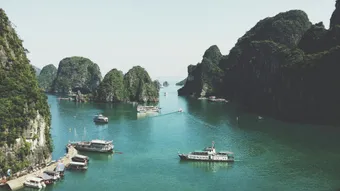
Photo by foc foodoncam on Pexels
Limestone karsts: A breathtaking view of Halong Bay with boats navigating through limestone islands.
Day 5 - Morning in the bay then return to Hanoi, free evening to savor the capital's flavors and nightlife.
Morning on board: Tai Chi & final visits
Optional morning Tai Chi session on deck, savor the sunrise and sea air as you move through a few gentle sequences, an ancient Chinese discipline famed for calming the mind and awakening the body. Breakfast follows, often featuring fresh ingredients and local specialties to start the day off right. Depending on the itinerary, you may then head out for an additional excursion, explore a sea‑carved cave or go kayaking among islets and cliffs, before returning to port. A little anecdote: in many coastal regions, caves long served as shelters for fishermen and sometimes contain traces of ancient human activity, which makes each discovery even more memorable.
Transfer back to Hanoi
Disembark in late morning or at the very start of the afternoon, then transfer for about 3.5–4 hours toward Hanoi. Along the way you’ll pass through rural landscapes, rice paddies and small towns, a great opportunity to glimpse everyday Vietnamese life and, depending on the itinerary, the distant silhouettes of limestone karsts. Arrival is expected late afternoon; you will then have free time to stroll and shop in the famous Old Quarter (the “36 streets,” each historically devoted to a particular trade) or to try a local dinner: northern-style pho, bun cha (the dish that caused a sensation during Anthony Bourdain’s visit), or the famous egg coffee, a Hanoi specialty born last century.
Evening free in the Old Quarter
Enjoy one last street dinner, a steaming bowl of phở, a bun cha, or a few skewers shared on a low stool, then catch a water-puppet show, an ancient art born in the rice paddies of the Red River Delta where farmers once performed puppet shows on flooded stages, or end the evening with a refreshingly cold bia hơi in the lively alleyways of the Old Quarter, among colonial-era façades and the 36 trade streets that tell the city's commercial history.
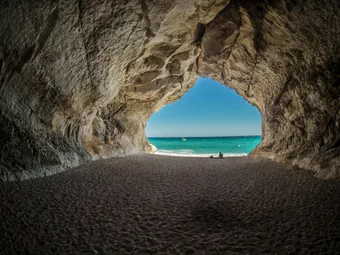
Photo by Pixabay on Pexels
Sea cave exploration: Discover a peaceful beach scene framed by a natural cave formation, perfect for relaxation.

Photo by Võ Văn Tiến on Pexels
Northern Vietnam heritage: Couple in traditional Vietnamese clothing smiling outside a shop.
Day 6 - Final nature day at Ba Vi, a short mountain hike to finish the journey with fresh air and panoramas before departure.
Day trip to Ba Vi National Park (hike)
Easy hike about an hour and a half from Hanoi, in a mountainous park that leads up to the summit of Huu Tiep: well-marked trails climb to viewpoints offering wide views over the countryside and the surrounding rice fields, a lovely nature escape close to the capital. Along the way you encounter colonial remnants, often photographed and steeped in history: these old buildings recall the holiday retreats of yesteryear and add a melancholic touch to the scenery. The park also shelters several temples, local pilgrimage sites where you will often see offerings and folk beliefs tied to the mountains and nature spirits. On the cultural and local-food side, don’t miss the village stalls: herbal tea, small mountain specialties and traditional snacks add flavor to the walk. Ideal for a day trip from Hanoi, this hike combines moderate effort, panoramas and cultural immersion, a perfect nature-filled finale after city sightseeing.
Return to Hanoi & end of program
Return to Hanoi in the late afternoon, in preparation for the transfer to the airport.
If you choose to stay a little longer, a few quick ideas: stroll around Hoàn Kiếm Lake at sunset and see the small Turtle Tower (evoking the legend of the sword returned to the giant turtle); taste an egg‑coffee, said to have been created at Café Giảng just after World War II; or try a bowl of phở or a serving of bún chả in the Old Quarter (the dish made internationally famous by Obama’s visit). You can also attend a water‑puppet show at the nearby Thăng Long Theatre.