
Intimate Andalusia: cities, patios and sea
Last update: March 6, 2026
Balanced itinerary blending monumental heritage, Andalusian music and cuisine, with coastal stops for relaxation. The route includes the essentials of Seville and Granada, a cultural pause in Córdoba, and calmer breaks in Ronda and Cádiz.
Spain: Seville, Córdoba, Granada, Ronda, Cádiz
Day 1 - First contact with Seville between palaces and the old quarter. A relaxed evening to acclimate and taste local tapas.
Real Alcázar of Seville
Patio de Banderas, s/n, 41004 Sevilla, Seville, Spain
Visit the palace of the Castilian kings, a complex of rooms, courtyards and gardens shaped over centuries by Islamic and Christian influences. The coexistence of Mudejar decorations and later Renaissance inserts narrates the political transition of medieval Andalusia. The patios reveal a water and shading system designed for the climate, a legacy of Andalusian hydraulic know-how. You will notice mosaics, carved ceilings and vegetation that changes depending on the rooms visited. The site has been used as a location for international film and TV productions, bringing attention to quieter corners for curious travelers. Book a priority ticket to access the main rooms and reserve time to stroll through the peaceful gardens.
Plan for a transfer between Real Alcázar of Seville and Seville Cathedral. For this journey, the best type of transportation is : Walking. With this option, the estimated duration is : 00:05. Short walk between the two monuments, with cobbled streets and photo stops.
Cathedral and La Giralda
Av. de la Constitución, s/n, 41004 Sevilla, Seville, Spain
The Cathedral of Santa María de la Sede is one of the largest Gothic cathedrals in the world, built on the site of a former mosque. The Giralda, an Almoravid tower turned bell tower, still preserves a wide ramp originally designed for the sultan to ascend on horseback. Inside, royal tombs and artworks illustrate Seville’s commercial wealth in the 16th and 17th centuries. Climbing La Giralda offers an unobstructed view over the historic quarter and tile roofs, useful for orienting subsequent walks. The cathedral also hosts concerts and events, showing its active role in city life. Visit the treasury and the chapel to better understand the donations of prominent Andalusian families.
Plan for a transfer between Seville Cathedral and Santa Cruz quarter. For this journey, the best type of transportation is : Walking. With this option, the estimated duration is : 00:07. Short downhill walk, ideal to feel the neighborhood atmosphere.
Walk through the Santa Cruz quarter
Barrio de Santa Cruz, 41004 Sevilla, Seville, Spain
Former Judería, Santa Cruz is a network of narrow alleys, flowered patios and secluded squares that reveal layers of urban history. By wandering you will encounter ceramic workshops and shops carrying local crafts such as traditional embroidery. Small plazas host discreet tapas bars serving classic Sevillian dishes, perfect for a first culinary contact. The shade of orange trees and the presence of fountains date back to urbanism designed to cool the city in summer. The charm lies both in white facades and in the oral anecdotes of residents who often share the story of a patio or a notable house. This walk is ideal for a gentle first evening and for acclimating without hurry.
Plan for a transfer between Santa Cruz quarter and Seville historic centre (recommended accommodation). For this journey, the best type of transportation is : Walking. With this option, the estimated duration is : 00:10. Return to the accommodation at a relaxed pace while enjoying the evening light.
At the end of the day, accommodation such as Hotel located in Seville historic centre is recommended. Staying in the historic centre allows walking access to monuments, many hotels occupy old buildings featuring typical Andalusian patios.
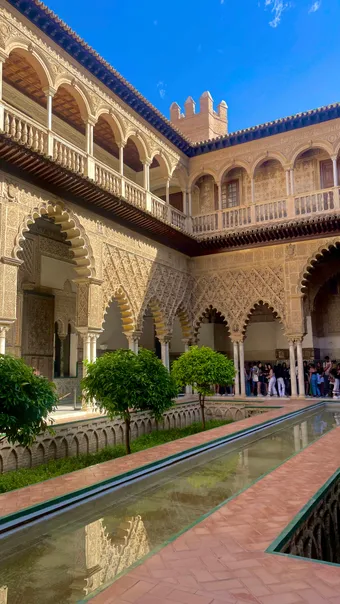
Photo by Stefany Sá on Unsplash
Alcazar: Inner courtyard of the Real Alcázar of Seville with richly carved Mudéjar arches, columned galleries, aligned orange trees, and a long rectangular pool reflecting the moorish architecture under a blue sky.
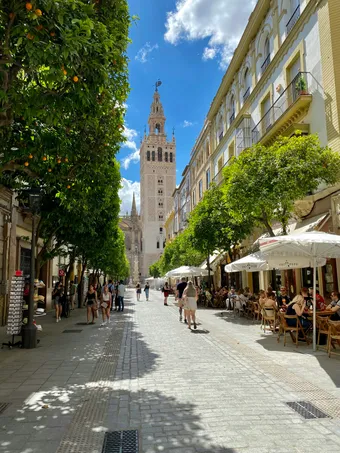
Photo by Iván Molina Mas on Unsplash
La Giralda: The Giralda, a former minaret converted into the cathedral’s bell tower, rises above the city with architecture blending Moorish and Renaissance influences beneath a bright sky.
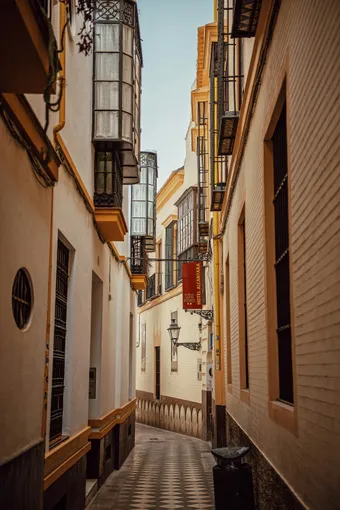
Photo by Tânia Mousinho on Unsplash
Barrio de Santa Cruz: Narrow street in Seville’s Santa Cruz district, lined with light-colored façades and traditional balconies in the historic old quarter.
Day 2 - A day devoted to neighborhood life and flamenco, blending flavors and crafts in Triana. An intimate musical evening to feel Andalusian culture.
Plan for a transfer between Seville historic centre (recommended accommodation) and Mercado de Triana. For this journey, the best type of transportation is : Walking. With this option, the estimated duration is : 00:15. Cross a historic bridge on foot to reach Triana, picturesque and practical.
Triana market and workshops
Mercado de Triana, Calle San Jorge, 6, 41010 Sevilla, Seville, Spain
Triana market is a lively place where seafood and Andalusian specialties reflect the district’s historic link with the Guadalquivir. You will easily spot fishmongers and local produce stalls as well as sections dedicated to artisanal preserves. Nearby, ceramic workshops continue a Triana craft tradition inherited from Islamic pottery. Participating in a short workshop helps understand the pigments and shapes that decorate the city’s balustrades and tiles. Bars around the market serve simple fresh tapas that are ideal for an instructive lunch. This moment offers a sensory approach to daily Sevillian life and opportunities to talk with artisans.
Plan for a transfer between Triana market and workshops and Parque María Luisa / Plaza de España. For this journey, the best type of transportation is : Taxi. With this option, the estimated duration is : 00:10. Short taxi ride to the park to avoid long walks in high temperatures.
Walk along the Guadalquivir and Plaza de España
Parque de María Luisa and Plaza de España, Sevilla, Seville, Spain
The river promenade allows views of Seville from its aquatic artery, revealing former arsenals and riverside facades. Plaza de España in Parque María Luisa is an example of early 20th-century regionalist architecture, integrating azulejos representing Spanish provinces. The colonnades and canal invite relaxation and thoughtful photography, away from peak tourist bustle. The space is fitting to discuss Seville’s role in the Ibero-American exhibitions. Rowboats can be hired for a low perspective on ceramics and bridges. It is also a good spot for sweet treats and a restful pause.
Plan for a transfer between Plaza de España and Tablao in Triana. For this journey, the best type of transportation is : Taxi. With this option, the estimated duration is : 00:12. Return to Triana by taxi to arrive comfortably for the evening performance.
Flamenco evening in Triana (local tablao)
Tablao in the Triana quarter, Seville, Seville, Spain
Attending a performance in a neighborhood tablao offers a more intimate experience than a large venue, focused on singing, guitar and the compás of flamenco. Triana has historic ties with Romani families and dynasties of cantaors and bailaores. Local performances often highlight lesser-known palos and artists sometimes share brief explanations between pieces. Pairing the show with a small-plate dinner helps understand Andalusian lifestyle. Flamenco appears as an expressive language linked to streets and daily life rather than a mere tourist show. Booking a small venue seat enhances the energy exchange between performers and audience.
Plan for a transfer between Tablao in Triana and Seville historic centre (recommended accommodation). For this journey, the best type of transportation is : Walking. With this option, the estimated duration is : 00:15. Walking return to the accommodation if timing allows, or short taxi if preferred.
At the end of the day, accommodation such as Hotel located in Seville historic centre is recommended. A second night in the centre simplifies morning departures and allows enjoying sunrise views from rooftops.
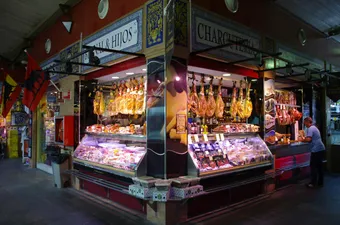
Photo by Lothar Boris Piltz on Unsplash
Mercado de Triana: Traditional charcuterie stall at the Mercado de Triana, Seville’s famous covered market, with hanging Iberian hams and Andalusian specialties.
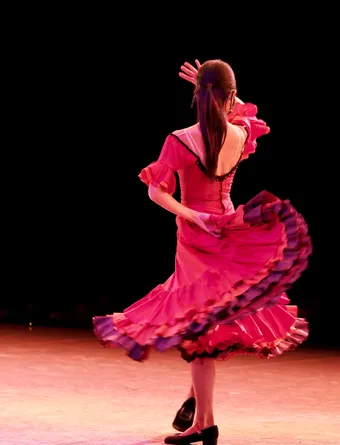
Photo by Kazuo ota on Unsplash
Flamenco dancer: Flamenco dancer in a swirling red dress, capturing the passion and energy of Andalusian dance. In Seville, flamenco is an integral part of the city’s cultural identity and musical traditions.
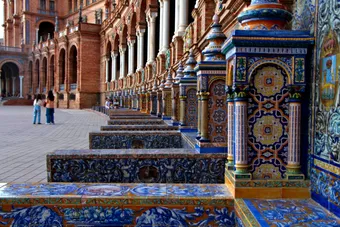
Photo by Eleni Afiontzi on Unsplash
Ceramics at Plaza de España in Seville: Colorful ceramics at Plaza de España in Seville, reflecting the city’s artistic craftsmanship and Andalusian tradition.
Day 3 - Transfer to Córdoba and immersion in the Mezquita and the Judería. Calm evening near historic patios.
Plan for a transfer between Seville historic centre (recommended accommodation) and Sevilla Santa Justa station. For this journey, the best type of transportation is : Taxi. With this option, the estimated duration is : 00:15. Short taxi from accommodation to the station for the morning train.
Seville – Córdoba by train and check-in
Sevilla Santa Justa station, Seville to Córdoba, Spain
Morning transfer to Córdoba, a direct train of about 1 h 25 allowing views over the Andalusian plain. Departure from Santa Justa station is convenient from the historic centre. The journey offers a glimpse of agricultural landscapes and olive groves characteristic of the region. Upon arrival in Córdoba, check into accommodation near the Judería to explore on foot. This trip is a good time to prepare for the afternoon visit and to buy priority tickets for the Mezquita. Leave a little margin to find a local café and adjust to the visiting schedule.
Plan for a transfer between Sevilla Santa Justa station and Córdoba station. For this journey, the best type of transportation is : Train. With this option, the estimated duration is : 01:25. Direct rail connection between Seville and Córdoba, comfortable and efficient.
Mosque-Cathedral of Córdoba (Mezquita)
Calle Cardenal Herrero, 1, 14003 Córdoba, Córdoba, Spain
The Mezquita is a masterpiece of Islamic architecture later transformed into a cathedral, famous for its forest of double arches and richly decorated mihrab. The site illustrates the layering of powers and faiths over centuries, with Umayyad, taifa and Christian contributions. Visiting reveals stylistic transitions visible in structure and decoration, a real manual of Andalusian religious history. Observing carved details and Renaissance additions helps understand Córdoba’s role as a medieval intellectual center. An audio guide or local guide enhances the reading of spaces and historical contexts. The filtered light inside creates an atmosphere conducive to contemplation and careful photography.
Plan for a transfer between Mezquita de Córdoba and Roman Bridge / Judería. For this journey, the best type of transportation is : Walking. With this option, the estimated duration is : 00:12. Walk along the river to reach the quarter and enjoy the views.
Stroll in the Judería and Roman Bridge
Streets of the Judería and Puente Romano, Córdoba, Córdoba, Spain
After the Mezquita, the Judería features flowered alleys and hidden patios, witnesses of an ancient urban life and an Andalusian lifestyle. The Roman bridge on the Guadalquivir provides a view of fortifications and the city from the river. White houses and pots of geraniums reflect the intensity of local patio traditions. You will find artisans and small taverns preserving Córdoba recipes such as salmorejo and rabo de toro. It is a good time to talk with locals and understand preservation efforts. The contrast between the Mezquita’s vast volumes and the intimacy of the alleys makes the visit complementary and balanced.
Plan for a transfer between Roman Bridge / Judería and Córdoba historic centre (recommended accommodation). For this journey, the best type of transportation is : Walking. With this option, the estimated duration is : 00:08. Return to the accommodation in the old town for the evening.
At the end of the day, accommodation such as Hotel located in Córdoba historic centre is recommended. Staying near the Judería allows early access to the Mezquita and enjoying the patios at dawn.
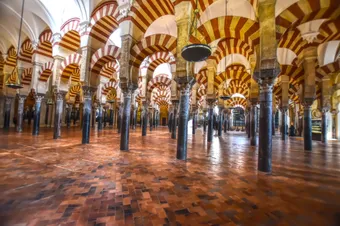
Photo by Bernard Manzerolle on flickr
Columns of Córdoba Cathedral: Forest of columns and red-and-white arches inside Córdoba Cathedral, a striking legacy of the former Great Mosque.
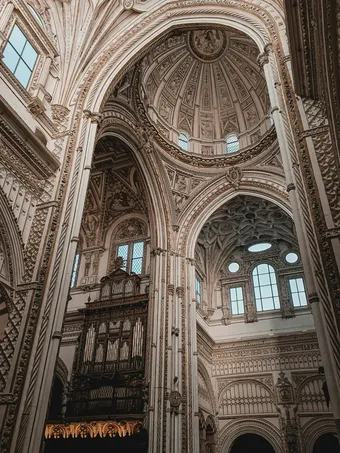
Photo by András Gál on Unsplash
Intérieur de la Cathédrale de Cordoue: Dome and sculpted architecture inside Córdoba Cathedral, at the heart of the former mosque turned iconic Andalusian monument.
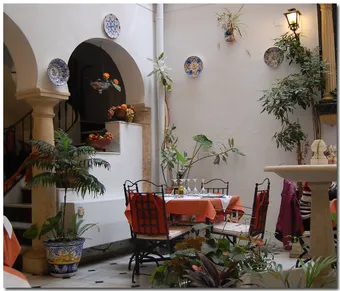
Photo by gillyan9 on flickr
Typical restaurant in the Judería district: Flower-filled patio of a traditional restaurant in Córdoba’s Judería, in the heart of the historic Jewish quarter. These patios decorated with ceramics, plants, and fountains are a distinctive feature of Andalusian architecture.
Day 4 - Arrival in Granada and discovery of historic neighborhoods with a wellness pause. The day prepares you for the Alhambra visit.
Plan for a transfer between Córdoba historic centre (recommended accommodation) and Córdoba station. For this journey, the best type of transportation is : Walking. With this option, the estimated duration is : 00:10. Short walk to the station, allow a taxi if you have luggage.
Córdoba – Granada and check-in
Córdoba station, Córdoba to Granada, Spain
Early departure by train or bus to Granada, roughly 2 h 35 depending on the service, crossing hills and agricultural areas. The journey signals entry into the province of Granada, with changing landscapes and a view toward the Sierra Nevada. On arrival, check into accommodation near the Albaicín or the centre to enable walking visits. Use the trip to read about Nasrid history which will make the Alhambra visit more meaningful the next day. Logistics allow arrival in the early afternoon to distransfercover the historic quarters. It is also a perfect time to confirm or reserve the Alhambra entrance if not yet booked.
Plan for a transfer between Córdoba station and Granada station. For this journey, the best type of transportation is : Train. With this option, the estimated duration is : 02:35. Intercity train journey, useful time to read on Alhambra history.
Albaicín quarter and Mirador de San Nicolás
Albaicín, Mirador de San Nicolás, 18010 Granada, Granada, Spain
The Albaicín preserves a network of narrow, winding streets, a medieval and Islamic layout evident in house niches and window openings. Mirador de San Nicolás offers an iconic view of the Alhambra with the Sierra Nevada as backdrop, helping place the palace within its landscape. Walking the quarter, you will find teterías and artisan workshops, reflecting persistent North African influences. The lanes retain small shaded squares often animated by local music in the late afternoon. Albaicín is also good for spotting forgotten palaces and ornately decorated doors often outside the heavy tourist flows. Stopping on a terrace allows you to appreciate the particular light of Granada.
Plan for a transfer between Mirador de San Nicolás and Chosen hammam. For this journey, the best type of transportation is : Walking. With this option, the estimated duration is : 00:10. Short walk within the Albaicín to reach the baths, along calm cobbled alleys.
Arab baths (hammam) for relaxation
Historic hammam or traditional spa in Granada, Granada, Spain
Traditional baths provide a relaxation moment inspired by Hispano-Muslim public care practices. Passing through hot, warm and cold pools helps recover from walking and prepares the body for further visits. Some facilities include massages and rituals with local oils, offering a sensory immersion. Baths are part of a long tradition of public bodily care dating back to the Nasrid era. It is a pleasant way to prepare for the evening and to approach the Alhambra visit rested. Note that evening slots can be sought after on weekends, so reservations are recommended.
Plan for a transfer between Chosen hammam and Albaicín or centre for accommodation. For this journey, the best type of transportation is : Walking. With this option, the estimated duration is : 00:12. Return walk to the accommodation for a restful evening.
At the end of the day, accommodation such as Hotel located in Albaicín quarter or Granada historic centre is recommended. Staying near the Albaicín makes morning access to the Alhambra easy and allows enjoying the palace illuminated at night.
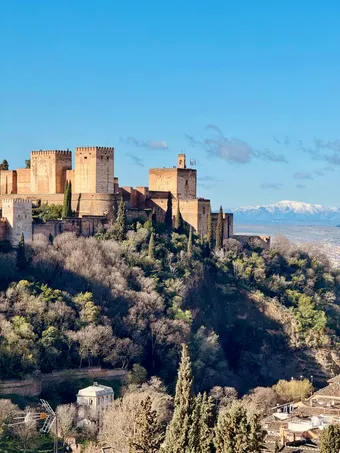
Photo by Cyril @cyrilczl on Unsplash
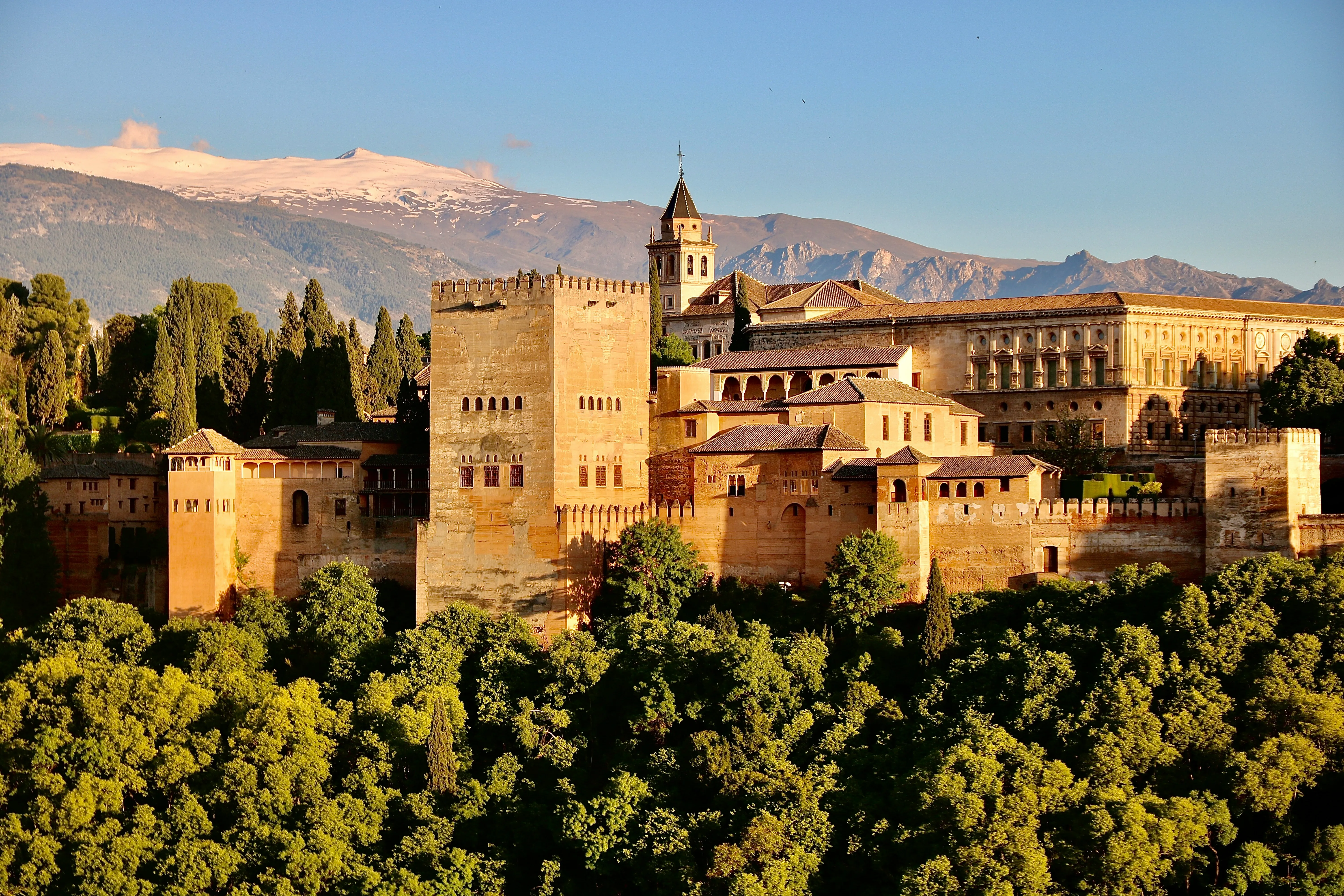
General view of Alhambra: The Alhambra of Granada overlooks the city from Sabika Hill, renowned for its Nasrid architecture and Moorish palaces surrounded by gardens.
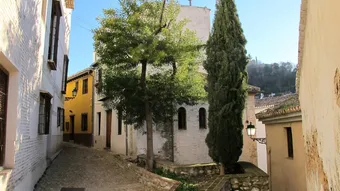
Photo by mariesophie Bock Digne on flickr
Albaicin area street: Quiet street in Granada’s Albaicín district, a historic neighborhood known for its white houses from the Moorish era. Their whitewashed walls, inner courtyards, and narrow streets reflect traditional Andalusian architecture.
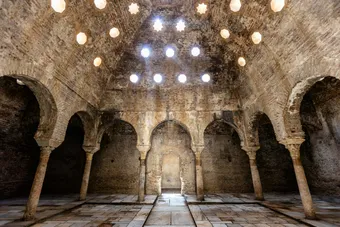
Photo by Mario La Pergola on Unsplash
Traditional bathhouse in Granada: Hall of the Bañuelo in Granada, one of the best-preserved Arab baths in Spain, dating from the 11th century and reflecting the importance of hammams in the social life of Muslim Andalusia. The architecture is typical of an Andalusian hammam from the Islamic period, featuring: a brick vault pierced with star-shaped openings to let in light, semicircular arches resting on columns, and a large rectangular hall typical of the warm or hot rooms of public baths.
Day 5 - Morning at the Alhambra then a scenic transfer to Ronda for an evening perched above the gorge. First impression of Andalusian mountain landscapes.
Plan for a transfer between Albaicín quarter or centre for accommodation and Alhambra. For this journey, the best type of transportation is : Walking. With this option, the estimated duration is : 00:12. Morning ascent to the Alhambra, wear comfortable shoes.
Morning visit to the Alhambra and Generalife
Alhambra, Calle Real de la Alhambra, s/n, 18009 Granada, Granada, Spain
The Alhambra is a Nasrid palace complex combining courtyards, richly decorated rooms and the Generalife gardens. A morning guided visit avoids the hottest hours and showcases light on muqarnas and stuccoes. The Generalife, a summer residence, illustrates the art of water gardens conceived for contemplation. Calligraphic inscriptions and decorative programs communicate political and spiritual messages. During the visit you will notice the hydraulic engineering that irrigated pools and fountains, central to this pleasure architecture. Advance booking is essential to secure the entrance time and to fully enjoy the site.
Plan for a transfer between Alhambra and Neighbourhood restaurant. For this journey, the best type of transportation is : Walking. With this option, the estimated duration is : 00:15. Descent to the centre for lunch in a welcoming setting.
Lunch in a neighbourhood restaurant and taste of Granada cuisine
Typical restaurant near the Alhambra or Albaicín, Granada, Granada, Spain
Local cuisine combines Andalusian and Mediterranean influences, with desserts like pionono and dishes using eggplant. Lunch near the Alhambra pairs view and local products, often served in shareable portions. Spices and preserves inherited from Arab traditions reappear in marinades and sauces. Neighbourhood restaurants tend to offer daily menus with local or small-producer ingredients. It is a good moment to taste regional wines or traditional drinks while discussing the origins of recipes with hosts. A relaxed meal also helps prepare for the afternoon transfer to Ronda.
Plan for a transfer between Neighbourhood restaurant and Bus station or departure point for Ronda. For this journey, the best type of transportation is : Taxi. With this option, the estimated duration is : 00:20. Taxi to the bus station to save time in the narrow streets.
Granada – Ronda transfer and first exploration
Bus or road route between Granada and Ronda, Granada to Ronda, Spain
Depart in early afternoon for Ronda, a journey of about 2 h 45 depending on the route, crossing countryside and limestone formations. Ronda is a hilltop town offering spectacular panoramas from the Puente Nuevo. On arrival, check in and take a first walk to locate the Plaza de Toros and viewpoints. An evening stroll highlights how light brings out the cliffs and white buildings. Ronda also has a history formed by border dynamics and small palaces and baths. The town suits quiet dinners focused on mountain products.
Plan for a transfer between Ronda centre and Ronda historic centre (recommended accommodation). For this journey, the best type of transportation is : Walking. With this option, the estimated duration is : 00:08. Short check-in and initial walk to take in the views.
At the end of the day, accommodation such as Hotel located in Ronda historic centre is recommended. Staying in Ronda places you near viewpoints and the Puente Nuevo to catch sunrise or sunset over the gorge.
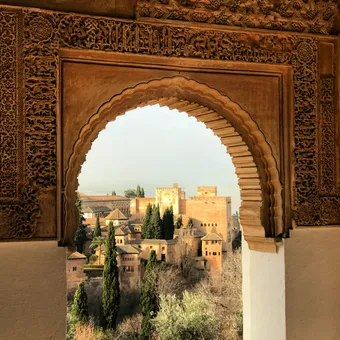
Photo by Jorge Fernández Salas on Unsplash
Alhambra: The Alhambra, (the complete Arabic form of which was Qalat Al-Hamra), is a palace and fortress complex located in Granada, Andalusia, Spain. It was originally constructed as a small fortress in AD 889 on the remains of Roman fortifications, and then largely ignored until its ruins were renovated and rebuilt in the mid-13th century by the Nasrid emir Mohammed ben Al-Ahmar of the Emirate of Granada, who built its current palace and walls. It was converted into a royal palace in 1333 by Yusuf I, Sultan of Granada.
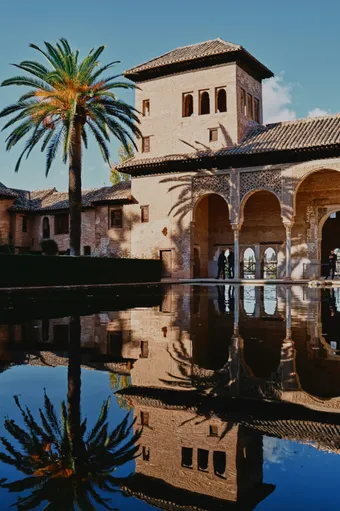
Photo by Girl with red hat on Unsplash
Alhambra: Courtyard of the Alhambra in Granada, where Nasrid architecture is reflected in the pools at the heart of the Moorish palaces.
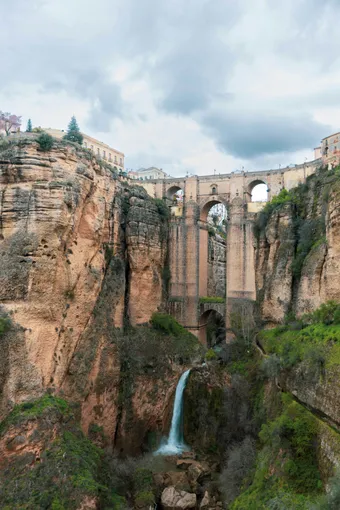
Photo by Gwenn Klabbers on Unsplash
View of famous Ronda bridge: The Puente Nuevo of Ronda spans the dramatic El Tajo gorge, linking the two historic parts of the town.
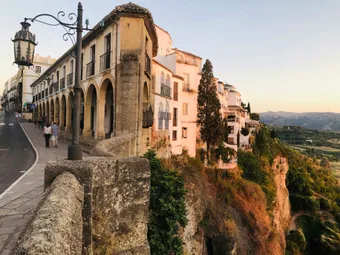
Photo by Peter Edwards on Unsplash
On the Ronda bridge: View from the bridge of Ronda overlooking houses perched on the edge of the dramatic El Tajo gorge. Built along the cliffside, they appear almost suspended above the precipice and offer spectacular views over the surrounding valley.
Day 6 - Transition day to the coast with an afternoon of rest in Cádiz. Evening seaside walk at sunset.
Plan for a transfer between Ronda historic centre (recommended accommodation) and Puente Nuevo / Ronda centre. For this journey, the best type of transportation is : Walking. With this option, the estimated duration is : 00:08. Short morning walk to the viewpoints and the arena.
Explore Ronda: Puente Nuevo and the bullring
Puente Nuevo and Plaza de Toros, Ronda, Ronda, Spain
Puente Nuevo spans the gorge of the Río Guadalevín, offering striking perspectives on the old town and cliffs. Ronda’s Plaza de Toros is among Spain’s oldest and helps understand the evolution of bullfighting in the region. Walking the ramparts uncovers gardens and small palaces often less visited than the bridge. The town has inspired writers and painters, which is felt in the introspective atmosphere of its viewpoints. Alleys around the central square offer artisan shops and vintage taverns. This morning is ideal for photography and buying locally made crafts tied to regional traditions.
Plan for a transfer between Ronda centre and Departure point by car/bus to Cádiz. For this journey, the best type of transportation is : Taxi. With this option, the estimated duration is : 00:10. Taxi to the departure point for the intercity journey to manage luggage.
Ronda – Cádiz transfer and seaside relaxation
Route between Ronda and Cádiz, Ronda to Cádiz, Spain
Depart for Cádiz in early afternoon, roughly 2 h 30 by road, passing through small Andalusian towns and changing scenery. Upon arrival, check in near the waterfront and walk to feel the atmosphere of one of Europe’s oldest port cities. Cádiz is closely tied to fishing and maritime exchange, visible in markets and beachside tapas bars. The bay and nearby beaches are ideal for an afternoon of rest, coastal walking or swimming depending on the season. The town retains a history of fortifications and towers that punctuate the shoreline. In the evening, opt for a seafood dinner in a local tavern.
Plan for a transfer between Cádiz centre and Playa de la Caleta. For this journey, the best type of transportation is : Walking. With this option, the estimated duration is : 00:15. Short stroll to the beach to enjoy the sunset.
Sunset walk at Playa de la Caleta
Playa de la Caleta, Cádiz, Cádiz, Spain
La Caleta is a sheltered small beach between two forts, appreciated for its intimate atmosphere and ocean views. The sunset is often calm, with fishermen and local families gathering there. Forts and promenades nearby tell the city’s defensive history and provide tranquil viewpoints. It’s an excellent time to enjoy a simple tapa outdoors and observe daily life in Cadiz. The proximity to the historic centre makes choosing a restaurant for the evening easy. Golden light highlights the whitewashed facades and creates a relaxed atmosphere.
Plan for a transfer between Playa de la Caleta and Cádiz historic centre (recommended accommodation). For this journey, the best type of transportation is : Walking. With this option, the estimated duration is : 00:12. Return to the accommodation in the historic centre close to the lively streets.
At the end of the day, accommodation such as Hotel located in Cádiz historic centre near the waterfront is recommended. Choosing the historic centre places you near seafood restaurants and within walking distance of the beach, in a city with a strong maritime imprint.
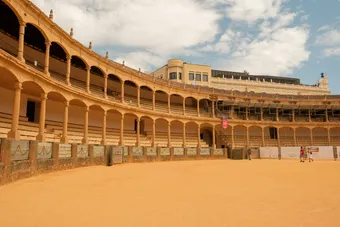
Photo by Alexis Presa on Unsplash
Bullring of Ronda: The bullring of Ronda, one of the oldest and most iconic in Spain. Inaugurated in 1785, this plaza de toros is considered a key site in the history of bullfighting and reflects the importance of tauromachia in Spanish cultural tradition.
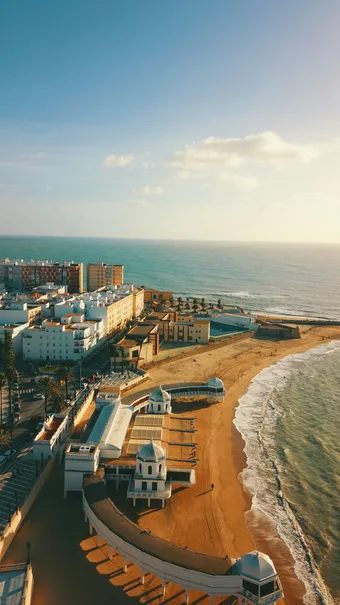
Photo by Vitaliy Zamedyanskiy on Unsplash
Seafront in Cadiz: Cádiz seafront with its golden beach and iconic seaside pavilions overlooking the Atlantic Ocean.
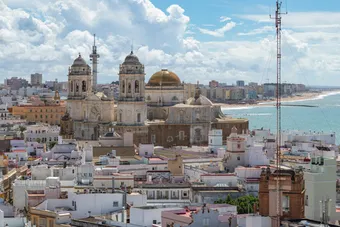
Photo by Jordi Vich Navarro on Unsplash
General view of Cádiz: View of Cádiz with its baroque cathedral rising above the white rooftops of the old town facing the Atlantic Ocean.
Day 7 - Relaxed morning in Cádiz between market, bay views and strolling the old town. Closing lunch before departure and end of accommodation.
Plan for a transfer between Cádiz historic centre (recommended accommodation) and Mercado Central de Cádiz. For this journey, the best type of transportation is : Walking. With this option, the estimated duration is : 00:10. Short morning walk to the market, practical to catch the local atmosphere.
Central market and local breakfast in Cádiz
Mercado Central de Cádiz, Plaza de la Libertad, s/n, 11003 Cádiz, Cádiz, Spain
Cádiz central market is a living place where fishmongers, producers and locals meet, ideal for a savory or sweet breakfast. You will find coastal specialties such as fried fish and artisanal preserves. Having a coffee at a market bar allows you to observe daily movements and learn the names of local products. The market is also a place of exchange where family recipes are often shared. It’s an authentic way to start the day with simple, very fresh flavors. Take away a few products for a last picnic if your departure is later.
Plan for a transfer between Mercado Central de Cádiz and Torre Tavira / historic centre. For this journey, the best type of transportation is : Walking. With this option, the estimated duration is : 00:12. Walk through historic streets to reach the tower and viewpoints.
Stroll through the historic centre and Torre Tavira
Cádiz historic centre and Torre Tavira, Cádiz, Cádiz, Spain
The historic centre preserves plazas, balconies and streets that tell the commercial history of Cádiz, frequented by New World merchants. Torre Tavira offers panoramic views and sometimes houses a camera obscura to understand the bay’s topography. Walking to the walls and forts reveals the city’s defensive imprint facing the Atlantic. Hidden squares house bars where you can taste a local vermouth before lunch. This route is feasible in the morning and lets you buy a few non-industrial souvenirs. The visit is ideal for a last cultural immersion before the trip ends.
Plan for a transfer between Torre Tavira / historic centre and Seafood restaurant. For this journey, the best type of transportation is : Walking. With this option, the estimated duration is : 00:10. Short walk to a nearby restaurant to enjoy a final convivial meal.
Seafood lunch and end of the trip
Seafood restaurant in Cádiz centre, Cádiz, Spain
To conclude the trip, a seafood lunch pays homage to Cádiz’s maritime vocation. Choose a place frequented by locals for a more authentic experience with prawns, fried calamari and grilled fish. Pair the meal with a regional wine or a light drink for one last Andalusian tasting. This meal allows you to reconnect with the impressions of the trip and note a few addresses to keep. After lunch, plan the transfer to your departure point taking into account travel time to the airport or station. End of accommodation, the day concludes with your departure.
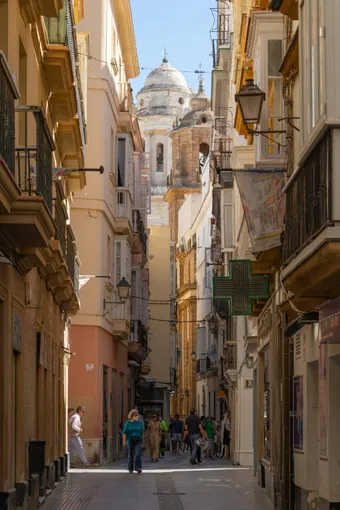
Photo by Jordi Vich Navarro on Unsplash
Street in Cádiz: Narrow street in Cádiz’s historic center, lined with light-colored houses, wrought-iron balconies, and lookout towers typical of this historic port city.
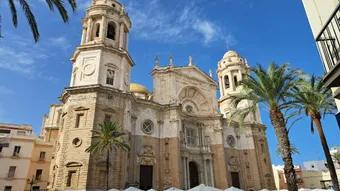
Photo by Sergio Guardiola Herrador on Unsplash
Cádiz Cathedral: Cádiz Cathedral, recognizable by its golden dome, rises above the old town and reflects the city’s maritime prosperity in the 18th century.
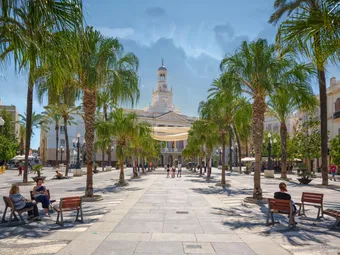
Photo by Bart Ros on Unsplash
Cadix: Plaza de San Juan de Dios in Cádiz, a palm-lined central square facing the city hall. It already played a major role in medieval times, when it was the city’s main square known as Plaza del Remedio.