
Romantic week-end in Rome : history and culinary delights

Last update: December, 1st 2025
A 4-day romantic weekend in Rome tailored for lovers of history and Italian cuisine: from the Colosseum to the Vatican Museums, paired with authentic food experiences and a hands-on cooking class. A balanced program of iconic monuments, romantic walks and culinary highlights.
Italy: Rome
Day 1 - A gentle first evening to soak in Rome's atmosphere: Baroque stroll and a hearty Trastevere dinner.
Arrival and check-in
On arrival, you will be welcomed at the hotel, shown to your room and able to take a short, well-deserved rest after your journey. Don’t hesitate to ask the concierge to book your tours and restaurants: concierges, heirs to the medieval keepers of the keys, are often walking local encyclopedias and know how to find the restaurant or outing that will suit you, whether it’s a bouillabaisse in Marseille, a choucroute in Alsace or an off‑the‑beaten‑track stroll.
Evening stroll to Piazza Navona and fountains
Discover Piazza Navona on foot, this Baroque masterpiece that still bears the imprint of Domitian’s ancient Stadium, hence its oval shape and its name, derived from the Latin in agone (“in the games”). At its center, let yourself be captivated by Gian Lorenzo Bernini’s Fontana dei Quattro Fiumi (1651), crowned by an ancient obelisk brought from the stadium: the four allegories represent the Nile (its veiled head, a sign of the then-unknown sources), the Ganges, the Danube and the Rio de la Plata, whose dramatic pose inspired a legend, it is said he shields himself at the sight of the façade of Sant’Agnese in Agone, Borromini’s rival work, reflecting the famous quarrel between the two architects. Around the square, painters, caricaturists and street musicians create a lively, romantic atmosphere; in summer, it’s the perfect spot to savor a gelato or an espresso on a terrace and let yourself be carried away by Roman magic. Perfect for a first romantic immersion into the Baroque heart of Rome.
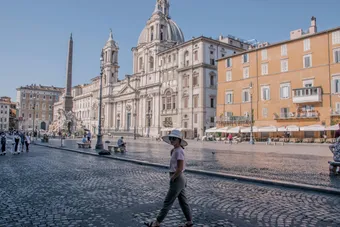
Photo by Polina Kostova on Pexels
Piazza Navona: Captivating view of Piazza Navona with tourists enjoying a sunny day

Photo by Andrea Piacquadio on Pexels
Trastevere: Woman sipping a beverage outdoors in a sunny city street, embodying leisure and enjoyment
Day 2 - A day devoted to ancient Rome: iconic monuments in the morning, museums in the afternoon, and a relaxed Pantheon evening.
Colosseum visit (skip-the-line recommended)
Dive into antiquity by visiting the Colosseum, the world’s most famous amphitheatre. Built by the Flavian emperors (Vespasian then Titus) in the 1st century, this monument reveals remarkable architecture: its superimposed orders (Doric, Ionic, Corinthian), its vast underground complex (the hypogeum), and, formerly, its velarium that sheltered spectators from the sun. Walking the seating tiers, you can sense how strictly organized Roman public life was: each row reflected a social rank. The Colosseum hosted gladiatorial combats, hunts of exotic animals brought from Africa and Asia, and even naval reenactments in its early days, the Romans sometimes flooded the arena to simulate sea battles. Anecdote: in the Middle Ages it served as a stone quarry and shelter, and its popular name stuck thanks to the bronze “Colossus” that once stood nearby, a statue attributed to Nero. Today you can still see traces of the mechanisms that lifted beasts and scenery up from the hypogeum, recalling the spectacular staging of those games. From the heights of the Palatine or the Arch of Constantine, the view of the Colosseum and the Roman Forum conveys the Empire’s grip on the city. After your visit, treat yourself to a typically Roman snack: a slice of pizza al taglio, crispy supplì, or an espresso in a neighborhood trattoria. To make the most of your visit and avoid the often-long lines, consider booking skip-the-line access in advance, you’ll save time and be able to better appreciate every corner of this unforgettable witness to Roman history.
Roman Forum and Palatine Hill
Stroll among the political and religious ruins of ancient Rome: temples with eroded columns, basilicas that served as courthouses and meeting places, and forums—true Roman agoras—where public affairs were argued, trials decided and elections organized. You can easily imagine the fiery speeches of orators, electoral inscriptions painted on the walls, and merchants of oil and wine vying for the attention of passersby; the word “forum” itself comes from Latin and meant both public square and place of commercial exchange. The basilicas, such as the Basilica Julia or the Basilica Aemilia, were not churches at first but civic centers where justice was administered and archives kept—something like the ancient equivalents of our courthouses and town halls. Temples, like those of Saturn or Vesta, housed the city’s cults and treasuries: legend has it that the Vestal Virgins tended Rome’s sacred flame, and that the smallest lapse was severely punished, so closely intertwined were religion and politics. From the heights of the Palatine, the panorama opens onto the Forum and the Colosseum: you can still make out the remains of the imperial palaces, the arcades of former gardens and, according to legend, the Lupercal cave where Romulus and Remus were said to have been suckled by the she-wolf—the founding myth the Romans loved to tell to legitimize the city’s birth. Nearby, the Colosseum—the Flavian Amphitheatre—recalls the games and spectacles that once thrilled the city. A little culinary detail to ground the visit: in antiquity people ate mostly bread, olives, garum (a much‑prized fish sauce) and fruit; today, after strolling among columns and steps, many pause for an espresso or a gelato while admiring these ruins, as if history still mingled with everyday life. This walk invites as much imagination as reflection: temples, basilicas and forums tell, stone by stone, Rome’s political and religious epic.
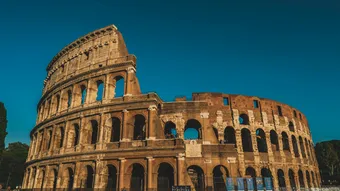
Photo by Chait Goli on Pexels
Colosseum: Stunning view of the ancient Roman Colosseum, captured at sunset showcasing its historic arches.
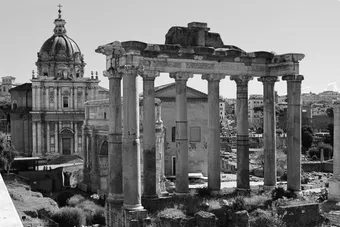
Photo by C1 Superstar on Pexels
Roman Forum: Black and white photo of ancient Roman Forum ruins with church

Photo by JÉSHOOTS on Pexels
gelato: A vibrant array of gelato in various flavors displayed in a shop freezer
Day 3 - A day exploring the Vatican's artistic treasures and riverside romance, capped by a flavorful dinner in the historic Jewish Ghetto.
During the day, you will take part in the following activities:
Vatican Museums and Sistine Chapel (reservation recommended)
Explore one of the world’s greatest art collections: tapestries, map galleries, paintings and Michelangelo’s spectacular Sistine Chapel. Allow at least three hours and book ahead to avoid the line. Anecdote: the Galleria delle Carte Geografiche is a magnificent gallery of 16th‑century maps painted from the geographical surveys of the time, while the tapestries on display come from Raphael’s cartoons. As for the Sistine Chapel, Michelangelo worked there between 1508 and 1512, he is said to have been reluctant at first, but his ceiling is now one of the high points of Western painting.
St. Peter’s Basilica and its dome in Vatican
Visit the most important basilica in Catholicism, a masterpiece blending architecture and sculpture (Bernini, Michelangelo). Climb the dome for an unforgettable panoramic view over St. Peter’s Square and Rome. Practical note/anecdote: Michelangelo drew the dome’s design, but other architects completed the final construction; the ascent involves over 500 steps (or you can take the elevator to reduce the effort). From the top you can clearly see Bernini’s square and the embracing colonnades.
Walk along the Tiber and Castel Sant'Angelo
Walk from the Vatican to Castel Sant'Angelo, Hadrian’s former mausoleum turned papal fortress, offering beautiful viewpoints over the river. It’s an ideal setting for a romantic late‑afternoon stroll. Anecdote: the castle is connected to the Vatican by the Passetto di Borgo, an elevated passage used by several popes in times of danger (notably during the Sack of Rome); the statue of the archangel atop the monument recalls the legend of an angel who appeared to end an epidemic in the 6th century.
Dinner in the Jewish Ghetto
Savor the unique cuisine of the Roman Jewish Ghetto: carciofi alla giudia (Jewish‑style artichokes), filetti di baccalà (baccalà fillets), and other recipes where Sephardic traditions meet Roman flavors. The neighborhood, established as a ghetto in 1555 and freed at the time of Italian unification in 1870, is steeped in history, perfect for a memorable evening of history and gastronomy. Culinary anecdote: the carciofi alla giudia, crispy outside and tender within, have become the symbol of the area and reflect frying techniques passed down through generations." day_accomodation: "Vous dormirez à cet endroit magnifique : Hotel Artemide. Comfortable 4★ hotel on Via Nazionale, attentive service, rooftop terrace for evening drinks and optional spa. Ideal starting point within walking distance of Trevi Fountain, the Pantheon and Termini station.
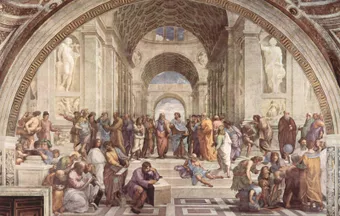
Photo by Pixabay on Pexels
Sistine Chapel: Famous Renaissance painting by Raphael depicting various philosophers in a classical setting.
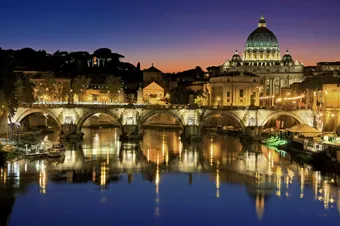
Photo by Julius Silver on Pexels
St. Peter's Dome: Beautiful view of Saint Peter's Basilica and St. Angelo Bridge at sunset reflecting in the Tiber River.
Day 4 - Art and taste to finish: a Borghese morning, relaxed shopping and a practical cooking experience for a memorable farewell.
During the day, you'll enjoy the following activities:
Galleria Borghese (morning visit with advance booking)
Discover a private collection assembled by Cardinal Scipione Borghese, nephew of Pope Paul V, showcasing masterpieces by Bernini, Caravaggio and Canova. The intimate, timed visit lets you admire Bernini’s sculptures (Apollo and Daphne, Bernini liked to design his works to be seen from a specific viewpoint), the dramatic lighting of Caravaggio’s canvases and the neoclassical grace of Canova’s Paolina Borghese. Nestled in the gardens of Villa Borghese, the museum has the hushed atmosphere of a private collection, be sure to book your time slot to enjoy the works without the crowds.
Trinità dei Monti staircase (Spanish Steps) and shopping on Via Condotti
Stroll across the famous Piazza di Spagna and its baroque steps, built in the early 18th century to link the Trinità dei Monti church with the square below. At the foot of the steps, the house-museum of John Keats recalls the site’s inspiration for Romantic poets. Nearby, Via dei Condotti, its name a reminder of the former water channels, is home to elegant boutiques and fashion houses. A perfect moment to wander, enjoy a café on the terrace and soak up Rome’s refined atmosphere.
Testaccio Market and cooking workshop (pasta making)
Guided visit of a bustling market in the authentic Testaccio neighborhood, the cradle of Roman cuisine, close to Monte Testaccio, the hill formed from millions of broken amphorae from antiquity. You’ll select fresh ingredients (cheeses like pecorino, cured meats such as guanciale, seasonal vegetables) before taking part in a hands-on fresh pasta workshop. On the menu: making the pasta and preparing a classic Roman dish (cacio e pepe, carbonara or amatriciana, depending on the menu). A convivial experience, ideal for taking home a local skill, and a few culinary anecdotes about the recipes’ origins.
Farewell aperitif on a panoramic terrace
To close the day, a final drink on a terrace overlooking the city’s roofs and domes. In the sunset light, savor an aperitivo (spritz, negroni or a glass of prosecco) accompanied by small hors d’oeuvres, and let your eyes wander over bell towers and monuments, a romantic, typically Roman moment to end the stay.
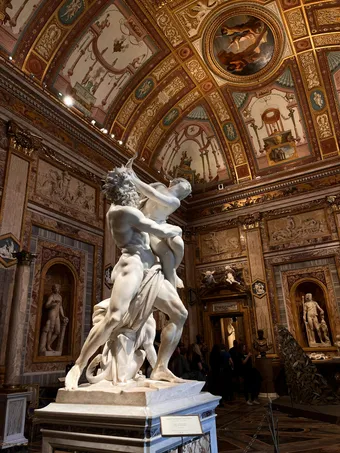
Photo by Anna Mitsu on Pexels
Galleria Borghese: Abduction of Proserpina Scultpure
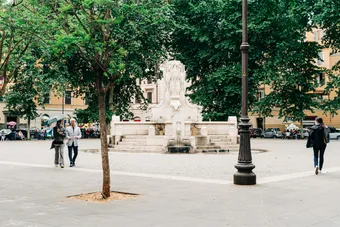
Photo by Gabrielle Clare Marino on Unsplash
Piazza Testaccio: Piazza Testaccio is the heart of the Testaccio neighborhood, known for its authentic Roman atmosphere far from the usual tourist paths. Once the site of a busy market, it is now a calm community space bordered by cafés, local shops, and lively residential streets. It serves as a favorite meeting spot for locals, reflecting the warm and down-to-earth spirit of Rome.

Photo by Kristina Paukshtite on Pexels
Spritz: The Aperol Spritz has become a symbol of the Italian dolce vita, a light and refreshing cocktail enjoyed especially at sunset. Often served on outdoor terraces, it pairs perfectly with relaxed aperitivo gatherings. Its balance of gentle bitterness and sparkling freshness makes it an iconic drink of Italian summer evenings.