
Flavors & Wonders of Normandy
Last update: November, 29th 2025
A 3-day weekend in Normandy designed for a couple: a gourmet escape featuring cider, Calvados, cheeses and seafood, along with visits to the region’s most iconic sites: Bayeux, the D-Day beaches, Honfleur and Deauville. A gentle, easy-going itinerary: stay in Bayeux to minimize travel time and fully enjoy tastings and leisurely strolls.
France: Bayeux, Colleville‑sur‑Mer, Caen, Honfleur, Deauville
Day 1 - A relaxed first day in Bayeux: history at the tapestry and cathedral, followed by first culinary discoveries with seafood and apple‑based drinks.
Bayeux Tapestry Museum
Set off to discover the famous Bayeux Tapestry, the enormous medieval embroidery that, panel by panel, tells the story of the Norman conquest of 1066. About 70 meters long and worked in wool on linen, probably by Anglo-Saxon embroiderers in the 11th century, it shows everything from the accession of Edward the Confessor to the Battle of Hastings, including the appearance of Halley’s Comet, then interpreted as an omen.
Essential for understanding local history and the ties between Normandy and England, the tapestry is also a one-of-a-kind work of art: its natural dyes (weld, madder, woad), its scenes of daily life and its military details make it a precious testimony. In Bayeux, the visit fits perfectly into a Normandy itinerary, from the D-Day beaches to the hedgerows where these events unfolded, and deserves to be followed by a typical meal: cider, camembert or a Normandy tart to prolong your immersion in local culture.
Bayeux Cathedral (Notre‑Dame)
Stroll at the foot of this Gothic cathedral, which inspired and provided the backdrop for the famous tapestry: a fine example of Norman architecture, blending Romanesque touches with Gothic stained glass, and offering a peaceful view over the old town with its tightly packed roofs. Naturally, one thinks of the Bayeux Tapestry, an 11th-century work that tells the story of the Norman conquest and was long linked to the cathedral; as you wander, imagine the embroiderers and the medieval scenes it depicts. After your walk, treat yourself to a coffee on a cobbled square or sample a few local specialties, camembert, oysters from the nearby coast, cider or calvados, to extend this moment of heritage and Norman indulgence.
Seafood lunch & local specialties
Settle into a neighborhood bistro or wander the market (if you happen to be there on market day): very fresh oysters, steaming mussels, the catch of the day, all washed down with a glass of Normandy cider, the sea just a stone’s throw away.
The morning markets here have their own atmosphere: the fishmonger praising his catch of the day, stalls that smell of iodine, and the regulars who pop next door to the bistro for a platter of oysters. On the culinary side, Normandy is generous, Isigny cream often elevates the mussels, and cider, the millennia-old drink of Normandy’s orchards, pairs perfectly with seafood (and can be followed by a small glass of calvados as a digestif). A simple lunch, rooted in maritime and agricultural traditions centuries old, and still with the sea as the backdrop.
Visit and tasting at a local cidery (cider & calvados)
Set off on a visit to a small family cidery to discover, step by step, how cider, pommeau and calvados are made, from pressing the apples in the bocage orchards to aging in oak oak barrels, then enjoy a guided tasting. Understanding the different types of apples (sweet, tart, bitter), the natural fermentation of the juice, and the subtle marriage of apple must and eau-de-vie that creates pommeau helps you appreciate why calvados, aged under strict appellation rules since the 20th century, holds such a special place in Norman culture.
Anecdote: on Norman farms, high-stem apple trees once formed living hedges that also sheltered the herds, the terroir shaped the drink. As an accompaniment, local pairings will be mentioned: sparkling cider with Camembert, pommeau as an aperitif, and calvados as a digestif or in the traditional trou normand, flavors that do justice to the region’s culinary identity.
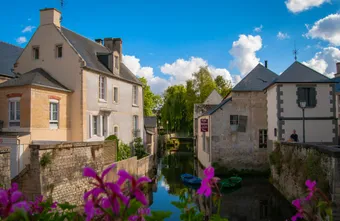
Photo by Veronica Reverse on Unsplash
Bayeux: Typical Norman houses in the center of the town of Bayeux
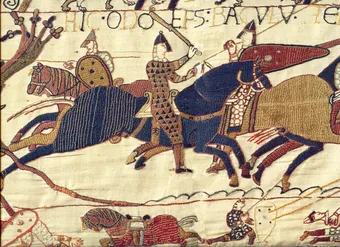
Bayeux Tapestry: A scene from the Bayeux Tapestry depicting Bishop Odo rallying Duke William's army during the Battle of Hastings in 1066

Photo by SAFEE a 501(c)3 corporation on Pexels
Allied D-Day souvenirs: WWII-era B-26 bomber 'Dinah Might' displayed in D-Day museum of Sainte-Marie-du-Mont in Normandy
Day 2 - A day of remembrance and history at the D‑Day sites and the Caen Memorial, balanced with leisurely seaside lunches and Norman flavors.
D‑Day beaches: Omaha Beach & American Cemetery
A moving visit to Omaha Beach and the American cemetery, where thousands of soldiers rest, a vast, hushed landscape that is unmissable for grasping the magnitude of June 6, 1944. On Omaha’s sand and pebbles you can still sense the scale of the landing; it’s also where photographer Robert Capa captured some of the most famous images of that day. Above, the Colleville‑sur‑Mer cemetery offers a striking perspective: immaculate rows of crosses and Stars of David, a chapel and a reflecting pool that give the whole place an almost palpable solemnity, facing the English Channel. A few kilometres away, the cliffs and fortified positions, like Pointe du Hoc, recall the strategy and sacrifice of the Allied operations. Walking these sites, listening to local stories and feeling the silence that hangs there, among Norman meadows and villages where camembert, cider and calvados are still served, is essential to understanding what that June 6, 1944 really was.
Arromanches: Landing museum and Mulberry harbour remains
Set off to discover the Allied-built Mulberry artificial harbour and the museum that traces the remarkable logistics of the Landing: you can still see the Phoenix caissons, the Whale floating roadways and the breakwaters formed from scuttled ships—impressive remnants visible from the beach or the cliffs overlooking the English Channel. The museum explains, with scale models and films, how these installations made it possible to bring men and materiel ashore, despite a violent storm that destroyed one of the two harbours and left the other, nicknamed "Port Winston" in honour of Churchill, to maintain Allied supply. After the visit, take a Normandy pause: a cider or an apple tart overlooking the sea helps you grasp the technical and human boldness of the operation.
Seaside lunch (Arromanches / Port‑en‑Bessin)
Take a gourmet break savoring fish caught in the English Channel and Norman specialties while enjoying a sea view. Here, fishermen often sell their daily catch at the harbour market, and it’s not uncommon to find the fish bathed in an Isigny cream infused with cider, a marriage of the sea and Normandy’s orchards. As a treat, indulge in a slice of camembert or Pont-l’Évêque for dessert, and remember that the region, heir to sailors and Vikings, has always lived to the rhythm of the great tides that sculpt its cliffs and horizons on the English Channel.
Caen Memorial Museum (on return)
A modern museum devoted to 20th‑century history and the Second World War: an essential stop to put your visit to the beaches into context. For example, the major institutions around the D‑Day beaches (such as the Caen Memorial) bring together films, personal items, archival documents and period vehicles that help connect the scenes seen along the coast with political decisions, military strategies and the everyday lives of civilians. Local anecdote: on arrival you are often struck by the contrast between the gravity of the exhibitions and the gentle Norman bocage nearby, apple trees, pastures and farms where Camembert, cider and Calvados are produced, perfect treats to round off a day of sightseeing. In short, after touring the beaches and their remnants, a stop in a museum of this kind offers the vital perspective needed to better understand the events and their consequences.
Dinner: tasting menu of Norman specialties
Gourmet evening in Bayeux: begin with a well‑aged camembert, born in Normandy (legend has it Marie Harel invented it at the end of the 18th century), followed by a livarot with a piquant paste, that "Colonel" belted with strips, evoking the traditions of the Pays d’Auge. For dessert, a teurgoule, that Normandy rice pudding slowly cooked and scented with cinnamon (its popular name means "that twists the face," so concentrated are its flavors after long cooking). And to finish the day, an apple‑based digestif, aged calvados or pommeau de Normandie, produced from nearby orchards, perfect for rounding off a stroll through the medieval lanes and along Bayeux Cathedral, a town also famous for its tapestry and for being one of the first liberated after the landings.
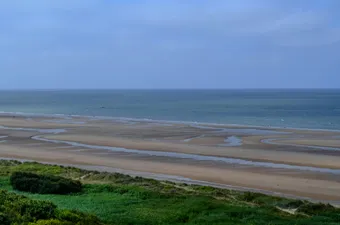
Photo by Hub JACQU on Pexels
Omaha Beach: Tranquil view of Omaha Beach in France, showcasing vast sand and calm sea under blue skies
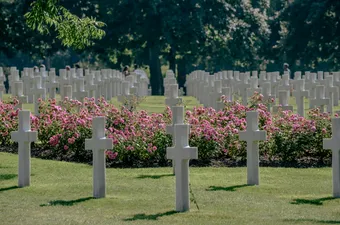
Photo by Hub Jjacqu on Pexels
Colleville-sur-Mer American Cemetery: Tranquil view of the cemetery with white crosses and blooming roses, honoring fallen soldiers.
Day 3 - A final day mixing coastal charm (Honfleur, Deauville) and the pastoral flavors of the Pays d'Auge, cheese tasting and last gourmet purchases to end the stay on a high note.
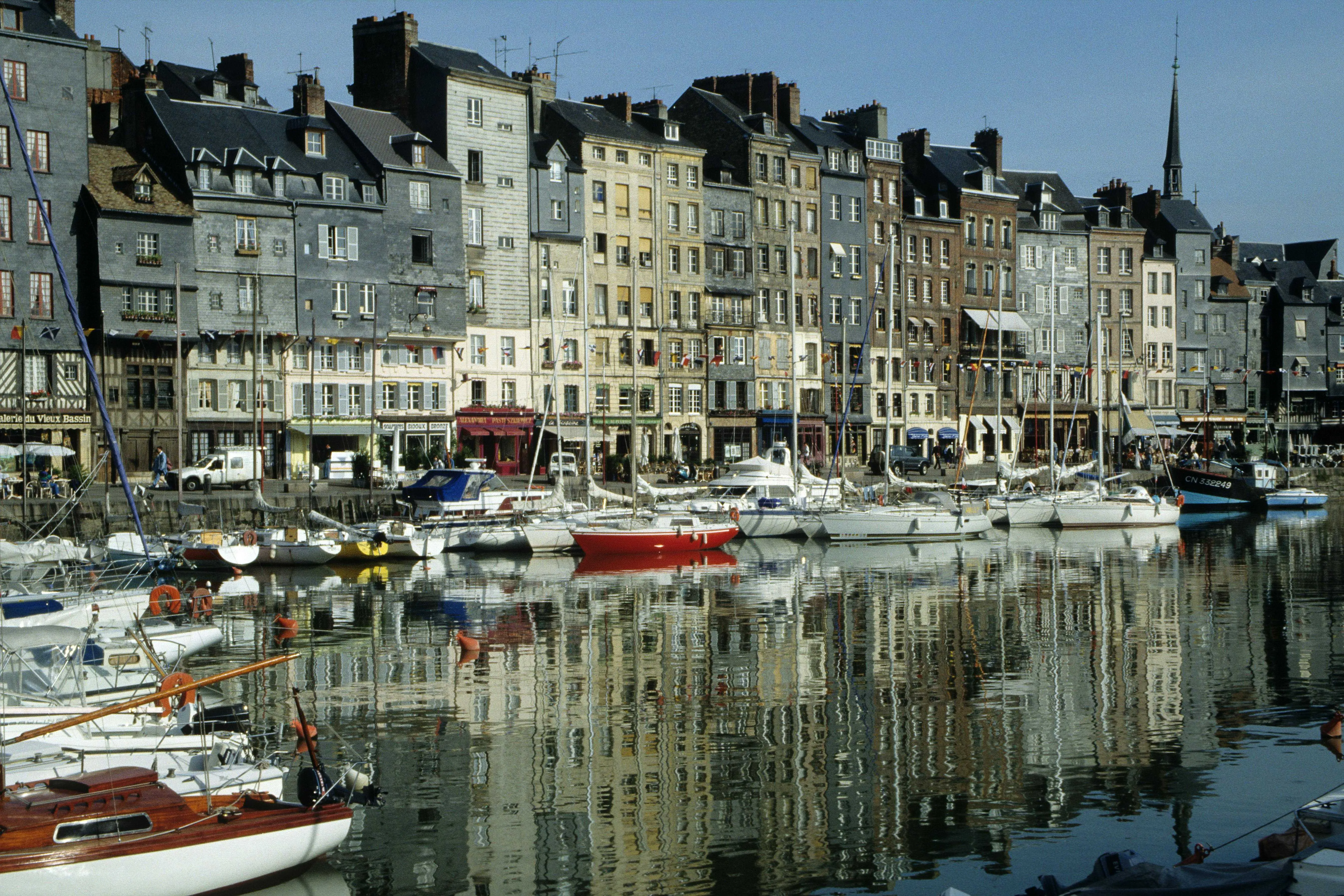
Honfleur: Old Harbour, Saint‑Catherine Church and markets
Start your morning as a couple at Honfleur’s Old Harbour, that charming port with narrow houses and colorful facades that inspired Eugène Boudin and the early Impressionists. Wander the cobbled lanes, step into the small art galleries and admire the distinctive silhouette of Sainte‑Catherine, a wooden church built by naval carpenters. At the water’s edge, amid the coming and going of small boats and the cries of gulls, tempt yourself with fresh oysters or a generous seafood platter, simply served with lemon or accompanied by a shallot vinegar, with a glass of Normandy cider or a dry white wine. As you taste, remember that these quays were once the departure point for many voyages to the New World: a little extra history for an already very romantic morning.
Short visit to Deauville: the Planches promenade
Discovering Normandy's seaside glamour means letting yourself be carried along a promenade lined with pines and Belle Époque villas, browsing numbered beach cabins that still smell of salt and sunny afternoons, and savouring the atmosphere of the shops and cafés facing the sea. These resorts, like Deauville, Cabourg or Trouville, have evoked since the 19th century the elegance of "all of Paris" on holiday: the boardwalk, the casino, the trotting races, and, sometimes, the memory of Proust in Cabourg. The numbered cabins, long a sign of a certain seaside etiquette, have kept that kitschy-yet-refined charm, you can still imagine them closed over a drying swimsuit or a hamper filled with oysters and a bottle of calvados. Wandering between artisan shops, galleries and terrace cafés is also about tasting the shore’s cuisine, scallops, grilled fish, and the fresh cider that accompanies the plates, while admiring, sometimes in the distance, the cliffs of the Alabaster Coast or the silhouette of the quays.
Fromagerie visit in the Pays d'Auge (Camembert) and tasting
Meet a local cheesemaker to discover the traditional craft of camembert and taste cheeses at different stages of aging, a warm, authentic experience.
In the small dairy nestled in the heart of the Norman bocage, you'll watch curds being ladled into molds, the rind being inoculated with Penicillium, and the aging steps in cool cellars where the cheese slowly transforms. You'll also hear the little story of camembert, the legend of Marie Harel, who in the late 18th/early 19th century is said to have created the cheese after receiving advice from a priest from Brie, and learn the difference between the "true" Camembert de Normandie made from raw milk, protected by an appellation, and the industrial versions.
At the tasting, compare a young cheese that is still firm, an intermediate-aged one that's creamier, and a well-aged camembert, almost runny, with aromas of mushroom and forest floor. To complete the experience, nothing beats a glass of dry cider or a dash of calvados, some crusty bread and a few apple slices, a complete portrait of Norman terroir in a single bite.
Last gourmet stops: buy cider, calvados and cheeses to take home
Take advantage of local shops to bring back gourmet souvenirs: a good cider, dry or sweet, sometimes sparkling under the name "cidre bouché"; a bottle of calvados (the Norman eau‑de‑vie, AOC since 1942 and refined by aging in oak casks); aged cheeses (Camembert, which legend attributes to Marie Harel in 1791 —, Livarot, Pont‑l’Évêque…) and artisanal jams, often made the traditional way (slow‑cooked in cauldrons) and sometimes brightened with a dash of calvados. These little treats make excellent gifts, and are wonderful enjoyed with a slice of fresh bread and a hearty bowl of cider.
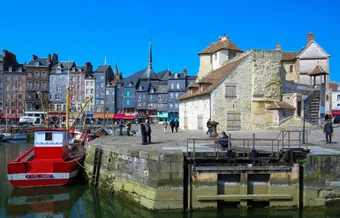
Photo by Mark Lawson on Unsplash
Honfleur harbor: A bright scene of Honfleur’s harbor in Normandy, where historic, colorful houses line the old basin. In the foreground, a small red boat and the weathered stone quay enhance the authentic charm of the port. Visitors enjoy a sunny day in this picturesque maritime setting.
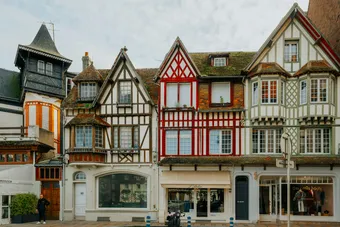
Photo by Nadia Petrusk on Unsplash
Deauville: Typical Deauville façades with their colorful half-timbering, brickwork, and slate roofs, capturing the refined charm of this Normandy seaside town. Elegant shopfronts and intricate architectural details create a warm and stylish atmosphere.