
Splendors of the Dalmatian Coast: A Journey to the Heart of the Adriatic
Last update: January 27, 2026
Balanced itinerary along the Dalmatian coast combining historic towns, island ferries and local culinary experiences. Pace alternates cultural discovery and swimming to showcase iconic sites and quieter spots.
Croatia: Split, Pučišća, Hvar, Korčula, Mljet, Dubrovnik
Day 1 - First day focused on Split's history and panoramic views. Calm evening in the old town to acclimatize.
Diocletian's Palace
Dioklecijanova palača, 21000 Split, Split, Croatia
Diocletian's Palace forms the historic core of Split and dates back to the fourth century. The site functions both as an ancient monument and a living neighborhood where medieval houses have integrated into the Roman structure. Entering through the Golden Gate you immediately sense the layering of eras that shaped the city. Roman remains coexist with shops and cafés, showing the continuous use of the space. The palace cellars are well preserved and often host exhibitions or concerts in summer. Visiting offers insight into ancient urbanism and how Split grew around this imperial nucleus.
Plan for a transfer between Diocletian's Palace and Riva and waterfront. For this journey, the best type of transportation is : Walk. With this option, the estimated duration is : 00:07. Short walk on pedestrian streets in central Split.
Riva waterfront promenade
Riva, 21000 Split, Split, Croatia
The Riva is Split's iconic seaside promenade lined with palm trees and cafés, located on former Roman quays. It is a social hub where locals gather at sunset for coffee and conversation. The surrounding architecture reveals Venetian and Austro-Hungarian influences from different historical periods. This walk lets you observe daily life while enjoying direct views of the sea and ferries to the islands. The terraces serve Dalmatian specialties such as grilled fish and peka, which make a pleasant introduction to local cuisine. The relaxed pace of the Riva provides a soothing contrast after exploring the palace.
Plan for a transfer between Riva and waterfront and Marjan Hill. For this journey, the best type of transportation is : Walk. With this option, the estimated duration is : 00:20. Gradual ascent to the wooded trails, wear comfortable shoes.
Marjan Hill viewpoint at sunset
Marjan Hill, 21000 Split, Split, Croatia
Marjan Hill is Split's green lung with wooded paths and viewpoints over the bay. Residents come here to run, picnic or seek shade away from the center. From the summit you can see the old town and the islands beyond, an ideal panorama at sunset. Small chapels and cultural points on the slopes recall the city's maritime ties. The cliffs and coves below Marjan invite a short swim after the walk. This outing blends nature and panoramic views, a relaxed way to end the first day.
Plan for a transfer between Marjan Hill and Evening accommodation in Split Old Town. For this journey, the best type of transportation is : Walk or short taxi. With this option, the estimated duration is : 00:15. Descent to the old town, mixture of steps and paths, taxi available if preferred.
At the end of the day, accommodation such as Apartment or small boutique hotel located in Split Old Town is recommended. Staying in the old town places you next to Diocletian's Palace and the Riva. The area retains historical atmosphere and narrow streets convenient for quiet evenings.
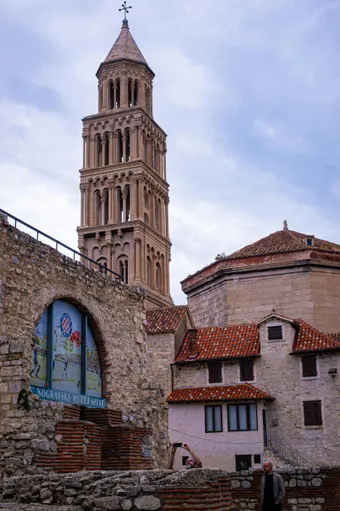
Photo by Oleksiy Konstantinidi on Pexels
Historic Bell Tower of Diocletian’s Palace in Split: Stunning view of the iconic Bell Tower of Diocletian's Palace in Split
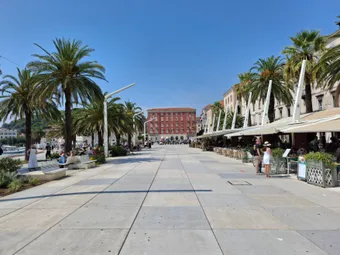
Photo by ArhistefoBL on wikimedia
Riva Split: Riva and the waterfront promenade in Split
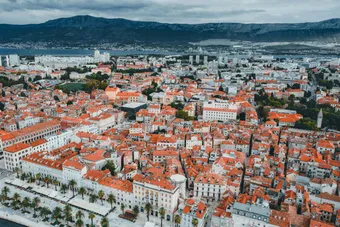
Photo by Luciann Photography on Pexels
General view of Split: Stunning aerial shot of Split, Croatia, showcasing historic architecture and vibrant rooftops against a mountain backdrop.
Day 2 - Island day on Brač between swimming at Zlatni Rat and artisan Pučišća. Evening in Bol, a friendly coastal village.
Ferry Split - Supetar and swim at Zlatni Rat
Zlatni Rat Beach, Bol, 21420, Bol, island of Brač, Croatia
The ferry ride from Split to Supetar immediately introduces the island dimension with views of coasts and islets. From Supetar a local transfer or bus takes you to Bol and the famous Zlatni Rat beach, recognized for its shifting shape due to currents. Zlatni Rat is a pebble beach surrounded by quieter coves to explore. The clear water invites swimming, stand-up paddle or snorkeling to observe Mediterranean marine life. The area has a long tradition of fishing and olive cultivation, reflected in simple fresh local menus. The beach is ideal for combining relaxation and short coastal walks for varied viewpoints.
Plan for a transfer between Zlatni Rat Beach, Bol and Pučišća. For this journey, the best type of transportation is : Local bus or car. With this option, the estimated duration is : 00:45. Scenic island road. Some stretches are winding, allow extra time in high season.
Pučišća and stone masonry workshops
Pučišća, 21412 Pučišća, Pučišća, island of Brač, Croatia
Pučišća is renowned for its quarries and stone-sculpting school, reflecting an old craftsmanship tradition. Brač stone blocks were used in many regional buildings, and local workshops allow watching stonemasons at work. Walking around Pučišća bay reveals a more artisanal and intimate atmosphere than larger beaches. Small taverns serve dishes based on olive oil and grilled fish, showing local culinary links to the sea. The white facades and architecture display the connection between local material and traditional building. The visit highlights the cultural and economic importance of Brač stone in Dalmatian history.
Plan for a transfer between Pučišća and Evening accommodation in Bol. For this journey, the best type of transportation is : Local bus or taxi. With this option, the estimated duration is : 00:50. Return to Bol for the evening. Frequency depends on season.
At the end of the day, accommodation such as Guesthouse or seaside apartment located in Bol, island of Brač is recommended. Staying in Bol gives early access to Zlatni Rat and lets you enjoy the port and seafood restaurants at night. The village keeps a relaxed seaside ambiance and remains less overwhelming than larger resorts.
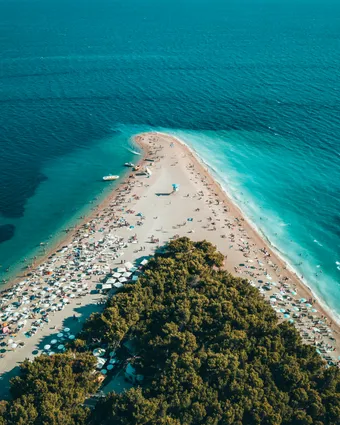
Photo by Oliver Sjöström on Pexels
Zlatni Rat Beach: Stunning aerial view of Zlatni Rat beach in Bol, Croatia, showcasing turquoise waters and sandy peninsula.
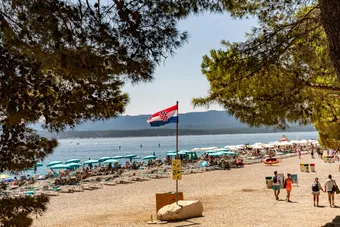
Photo by Vladimir Srajber on Pexels
Zlatni Rat Beach: A vibrant summer scene at Zlatni Rat beach with clear blue water and beachgoers enjoying the sun.
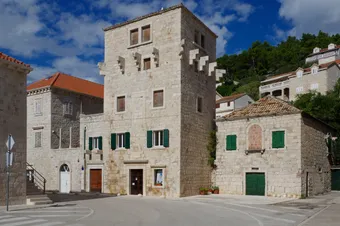
Photo by Berthold Werner on wikimedia
Pučišća: View of the village of Pučišća, renowned for its finely cut white stone houses, here dominated by a traditional tower with green shutters. The scene conveys a peaceful, authentic atmosphere typical of Dalmatian villages on the island of Brač.
Day 3 - Day focused on Hvar: town, fortress views and a relaxed culinary evening. Overnight in the town center by the harbor.
Crossing Bol - Hvar and tour of Hvar Town
Trg Sv. Stjepana, Hvar Town, 21450, Hvar, Croatia
The crossing to Hvar presents sea views and connects you to an island with strong maritime and agricultural traditions. Hvar Town is known for its main square framed by Venetian palaces and a visible cathedral from the harbor. The town has been an important stop for traders and sailors, visible in its streets and façades. Harbor walks and the main square offer insight into Hvar's architectural richness. Cafés and restaurants often serve fish and dishes flavored with local herbs like rosemary. Wandering the port and small galleries reveals local artisans and a lively but not overbearing tourist scene.
Plan for a transfer between Hvar Town and Fortica Fortress. For this journey, the best type of transportation is : Walk or short bus ride. With this option, the estimated duration is : 00:20. Ascent by foot or by small bus, good walking shoes recommended.
Fortica (Spanish fortress) for panorama and history
Fortica Fortress, Hvar, 21450 Hvar, Hvar, Croatia
Fortica sits above Hvar Town and dates to the 16th century, built to protect the island from corsair raids. The ascent provides broad views over rooftops, the harbor and the Pakleni Islands. The fortress retains walls and military remains that tell of centuries of coastal defense. Panoramic views from the ramparts are especially appreciated at sunrise or sunset. Inside, you can sense Hvar's strategic maritime importance in the Adriatic. The visit blends military history and sea landscapes, a good contrast after the harbor's calm.
Plan for a transfer between Fortica Fortress and Evening accommodation in Hvar Town. For this journey, the best type of transportation is : Descent on foot. With this option, the estimated duration is : 00:20. Return to the harbor area through cobbled streets.
Evening tasting of local products
Harbor and side streets of Hvar Town, 21450 Hvar, Hvar, Croatia
Hvar's cuisine relies on seafood, olive oil and aromatic island herbs. In the evening, dining in a traditional konoba allows tasting dishes like gregada or wood-grilled fish. Local wines, including indigenous grape varieties, pair well with these dishes and reflect the island's limestone soils. Markets and local shops sell artisanal products such as honey and herb-infused oils. This culinary immersion complements cultural visits and offers direct insight into Dalmatian flavors. It is a convivial moment to converse with locals and learn about the land-sea connection.
At the end of the day, accommodation such as B&B or small central hotel located in Hvar Town, island of Hvar is recommended. Staying in Hvar Town makes boat trips and island exploration easy while giving access to evening harbor life. The town balances summer buzz and intimate alleys off the main square.
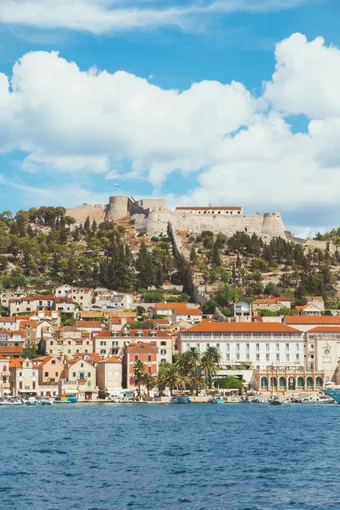
Photo by Jo Kassis on Pexels
The Hvar Fortress overlooking the coast: Scenic view of the historic fortress above Hvar town on the Adriatic Sea, Croatia.
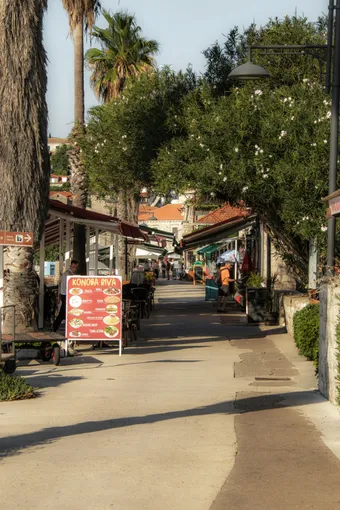
Photo by Nikola Kojević on Pexels
Typical street with Konoba: Lively alley in Croatia, lined with traditional konobas and shaded terraces, where palm trees and stone façades create a warm Mediterranean atmosphere. The setting invites leisurely strolls and the discovery of local cuisine in an authentic environment.
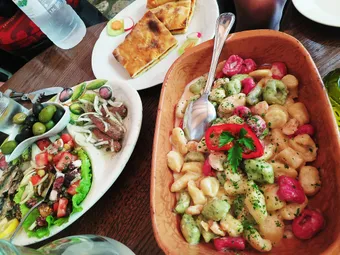
Photo by alchen_x on flickr
Local products at Konoba Menego, Hvar: Assortment of local products showcasing traditional Croatian dishes with vibrant Mediterranean colors and flavors. This generous table reflects the authenticity of Dalmatian cuisine, based on fresh, locally sourced ingredients.
Day 4 - Maritime day among the Pakleni Islands and a visit to the UNESCO landscape of Stari Grad Plain. Return to Hvar for the evening.
Boat trip to the Pakleni Islands, swimming and snorkeling
Pakleni Islands, Hvar archipelago, Pakleni Islands (departure Hvar), Croatia
The Pakleni Islands are a chain of islets near Hvar ideal for swimming and snorkeling in calm coves. A boat trip reveals secluded beaches and rocky inlets with exceptionally clear water. The islands feature small, isolated eateries and swimming spots away from the main coast. Landscapes are characterized by low Mediterranean vegetation and pine-shaded shorelines. A day here offers exploration of sea and coast in a relaxed rhythm. This maritime experience complements urban visits by providing direct contact with Adriatic nature.
Plan for a transfer between Pakleni Islands and Stari Grad Plain. For this journey, the best type of transportation is : Return boat then bus or car. With this option, the estimated duration is : 01:20. Return to Hvar then transfer across the island to Stari Grad by bus or car.
Visit to Stari Grad Plain, UNESCO agricultural landscape
Stari Grad Plain, 21460 Stari Grad, Stari Grad, island of Hvar, Croatia
Stari Grad Plain is a UNESCO-listed agricultural landscape cultivated since antiquity with a still-visible parcel system. Fields, dry-stone walls and olive trees testify to millennia of rural practice. A walk here explains the land organization inherited from Greek colonists of Pharos. The area is also known for small wineries producing local wines suited to island soils. Visiting emphasizes the quiet agricultural rhythm compared to busier ports. It is an opportunity to meet cultivators and taste products rooted in Hvar's terroir.
Plan for a transfer between Stari Grad Plain and Evening accommodation in Hvar Town. For this journey, the best type of transportation is : Bus or car. With this option, the estimated duration is : 00:40. Return to Hvar Town along scenic coastal roads.
At the end of the day, accommodation such as Boutique hotel or central apartment located in Hvar Town, island of Hvar is recommended. Remaining in Hvar allows easy access to sea trips and to the island's agricultural interior, while enjoying harbor amenities by night.
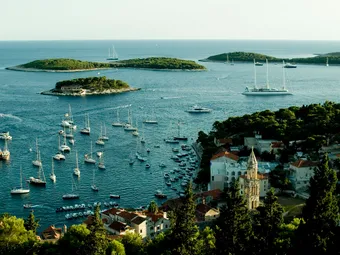
Photo by Rui Ornelas on flickr
Hvar Island – Pakleni Archipelago: Panoramic view of the Pakleni Archipelago, off the coast of Hvar Island, where small green islets rise from turquoise waters dotted with sailboats. This iconic landscape showcases the Mediterranean charm and tranquil atmosphere of the Croatian coast.
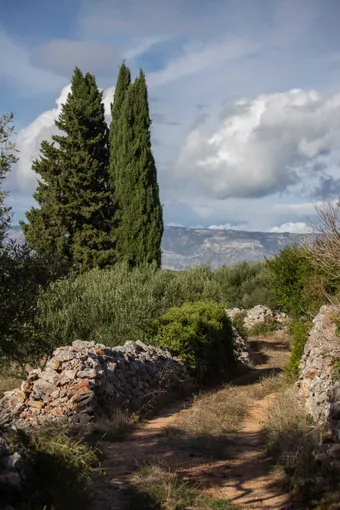
Photo by Vilma Matulić on wikimedia
Stari Grad Plain bucolic view: This UNESCO-listed rural landscape, with cypress trees and olive groves, reflects the island of Hvar’s ancient agricultural heritage and timeless serenity.
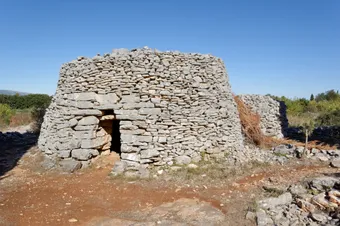
Photo by Gampe on wikimedia
Dry-Stone Hut on the Stari Grad Plain: Dry-stone hut typical of the Stari Grad Plain, a testament to the ancient agricultural landscape shaped since Antiquity. Standing alone in a sun-drenched, rugged setting, it embodies the simplicity and durability of traditional Dalmatian rural architecture.
Day 5 - Island-to-island day arriving at Korčula, exploring the old town and tasting local wines. Evening in the atmospheric medieval quarter.
Crossing Hvar - Korčula and tour of Korčula Old Town
Korčula Old Town, Korčula, 20260, Korčula, Croatia
The crossing to Korčula connects two islands with a rich maritime past and offers archipelago views en route. Korčula Old Town resembles a small Dubrovnik with narrow streets and well-preserved walls. The town also claims connections to Marco Polo, a theme present in local visits and lore. Walking the main spine street shaped like a fishbone reveals patrician houses, churches and artisan workshops. Local musical traditions and dances, such as Moreška, show the living cultural heritage of the island. Taverns serve family recipes and indigenous wines, providing a tasty introduction to Korčula's flavors.
Plan for a transfer between Korčula Old Town and Winery. For this journey, the best type of transportation is : Taxi or short transfer. With this option, the estimated duration is : 00:20. Access to vineyards in the outskirts of town on secondary roads.
Winery visit and tasting at a local estate
Vineyards around Čara or Lumbarda, Korčula, Korčula, Croatia
Korčula's vineyards on coastal soils yield wines with island character and local grape varieties. A tasting at a family estate deepens understanding of Dalmatian viticulture. Winemakers often explain cultivation techniques adapted to wind and salinity. Food pairings highlight cheeses, cold cuts and island seafood. Visits also narrate agricultural history and the passing of knowledge across generations. The tasting provides a direct sensory view of the island's terroir.
Plan for a transfer between Winery and Evening accommodation in Korčula Old Town. For this journey, the best type of transportation is : Return by taxi or local bus. With this option, the estimated duration is : 00:25. Return to the old town for the evening, schedules vary seasonally.
At the end of the day, accommodation such as Small hotel or apartment in the old town located in Korčula Old Town is recommended. Staying in the old town places you at the center of activities, restaurants and embarkation points for local trips. The medieval charm creates an intimate atmosphere after daylight excursions.
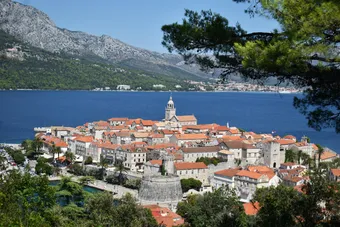
Photo by Joanna on Unsplash
Korcula general view: Panoramic view of Korčula, Croatia, with its fortified old town and red-tiled roofs standing out against the deep blue of the Adriatic Sea. Surrounded by mountains and pine trees, the historic town exudes an authentic and timeless Mediterranean charm.
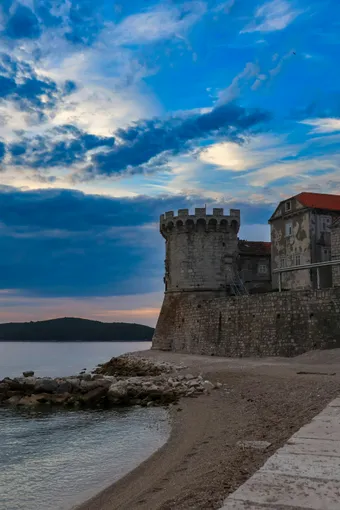
Photo by Meg von Haartman on Unsplash
Walls of Korcula: The medieval walls of Korčula, built mainly between the 13th and 15th centuries under Venetian influence, once protected the town from maritime invasions and Ottoman attacks. Overlooking the Adriatic Sea, these fortifications reflect Korčula’s strategic importance in trade and coastal defense along the Dalmatian coast.
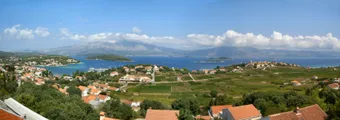
Photo by M_H.DE on wikimedia
Vineyards around Lumbarda: The vineyards around Lumbarda, on the island of Korčula, stretch all the way to the sea on sandy soils unique in Croatia. They are renowned for Grk, a rare local grape variety that produces fresh, mineral white wines emblematic of the region.
Day 6 - Nature day on Mljet around lakes, kayaking and visiting the monastery. Overnight near the park for a peaceful stay.
Crossing Korčula - Mljet and visit to Mljet National Park
Mljet National Park, Polače/Pomena, 20226 Mljet, Mljet, Croatia
Mljet is an island dominated by forests and salt-water lakes, ideal for hiking and cycling. The national park protects two coastal lakes, Veliko and Malo Jezero, with a small island featuring an old Benedictine monastery. The legend of Odysseus is often linked to Mljet, adding a mythic layer to the landscape. Walking around the lakes leads to viewpoints and allows observing Mediterranean flora. The inland waters are perfect for kayaking or pedal-boating, gentle activities accessible to many. The park offers a quieter nature experience compared to more touristed islands.
Plan for a transfer between Mljet National Park (Pomena/Polače) and Veliko Jezero. For this journey, the best type of transportation is : Local shuttle, walk or bike. With this option, the estimated duration is : 00:15. Internal park transfer to the lake, well-marked paths.
Kayak or pedal boat on Veliko Jezero and monastery visit
Veliko Jezero, Mljet National Park, Mljet, Croatia
Veliko Jezero invites paddling to reach the central islet and its 12th-century monastery. Kayak or pedal-boat transfers give a different perspective on the monastic architecture and surrounding landscape. The monastery served as a refuge and place of prayer, reflecting maritime and spiritual island ties. The lake's calm contrasts with the open sea, making the experience suitable for families and visitors seeking calm. Observing reflections and the pine-lined shore shows Mljet's distinct scenic quality. Walking paths around the lakes complement the water experience for a half-day of exploration.
Plan for a transfer between Veliko Jezero and Evening accommodation in Pomena or Polače. For this journey, the best type of transportation is : Walk or short transfer. With this option, the estimated duration is : 00:20. Return to park entrances and nearby lodging for the night.
At the end of the day, accommodation such as Guesthouse or small hotel near the park located in Pomena or Polače, island of Mljet is recommended. Staying close to the national park offers nocturnal immersion and easy access to sunrise and sunset over the lakes. Accommodations are simple and closely linked to nature.
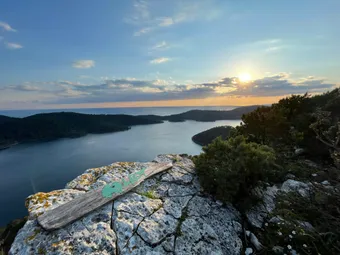
Photo by Aleksandar Vučin on Unsplash
Mljet: Panoramic view over Mljet National Park, a well-preserved island covered with pine forests and fringed by wild coves, often regarded as one of the greenest islands in the Adriatic. Steeped in legend—most notably that of Odysseus—Mljet is now a symbol of unspoiled nature and tranquility, protected for its exceptional biodiversity.
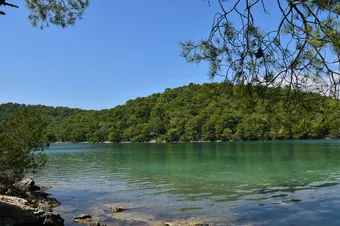
Photo by Prof. Mortel on flickr
Mljet National park with salted lakes: The saltwater lakes of Mljet National Park, Veliko and Malo Jezero, are connected to the Adriatic Sea by narrow natural channels. Their calm, slightly saline waters create a unique ecosystem set within a well-preserved forest landscape.
Day 7 - Final day in Dubrovnik with the city walls and a cultural stroll through the old town. Journey ends without an overnight included to allow onward travel.
Crossing Mljet - Dubrovnik and walk the Dubrovnik City Walls
City Walls, Dubrovnik Old Town, 20000 Dubrovnik, Dubrovnik, Croatia
The crossing to Dubrovnik marks the final coastal stage and leads to one of the Adriatic's most renowned cities. Dubrovnik's city walls encircle the old town and offer a panoramic walk revealing roofs, bastions and the sea. Built and reinforced between the 12th and 17th centuries, they protected the Republic of Ragusa from maritime threats. Walking the walls lets you study defensive architecture, restored cannon emplacements and views over the Elaphiti archipelago. Outside peak hours, morning or evening light reveals architectural details often missed. The walls synthesize the city's maritime power and strategic role through centuries.
Plan for a transfer between Dubrovnik City Walls and Rector's Palace and Old Town. For this journey, the best type of transportation is : Walk. With this option, the estimated duration is : 00:10. Short descent to the Stradun through cobbled streets.
Stroll through the Old Town and visit the Rector's Palace
Rector s Palace, Placa/Stradun, Dubrovnik Old Town, 20000 Dubrovnik, Dubrovnik, Croatia
Dubrovnik's old town is best explored on foot, with the Stradun forming the main pedestrian artery lined by monuments and craft shops. The Rector's Palace now hosts a museum that illustrates the institutional and maritime history of the Ragusan republic. Rooms display furniture, documents and objects that reflect diplomacy and civic life in earlier times. Roaming side streets reveals artisan workshops, small churches and shaded courtyards. This urban immersion offers a full picture of civic society, sacred art and Mediterranean exchanges. Local seafood specialties for lunch complement the cultural visit.
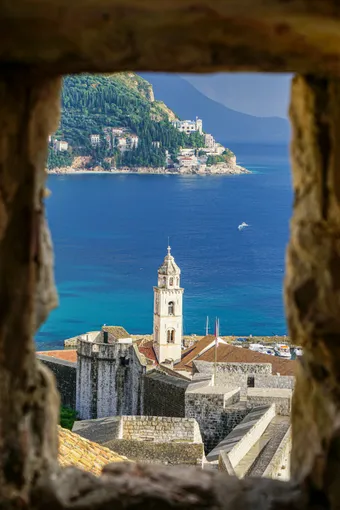
Photo by Arber Pacara on Unsplash
Dubrovnik: The Old Town of Dubrovnik, enclosed by monumental city walls, is filled with palaces, churches, and paved streets inherited from the Republic of Ragusa. Its historic center reflects a rich maritime and cultural past preserved through the centuries.
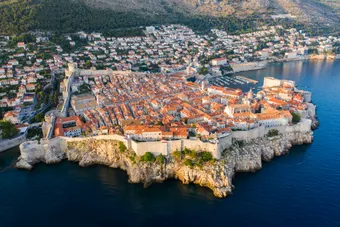
Photo by Geio Tischler on Unsplash
Dubrovnik: Dubrovnik, surnommée la « Perle de l’Adriatique », est une cité fortifiée classée à l’UNESCO, dont les remparts médiévaux témoignent de la puissance passée de la République de Raguse. Bordée par des falaises calcaires et une mer d’un bleu profond, la ville allie un patrimoine historique exceptionnel à un cadre naturel spectaculaire.
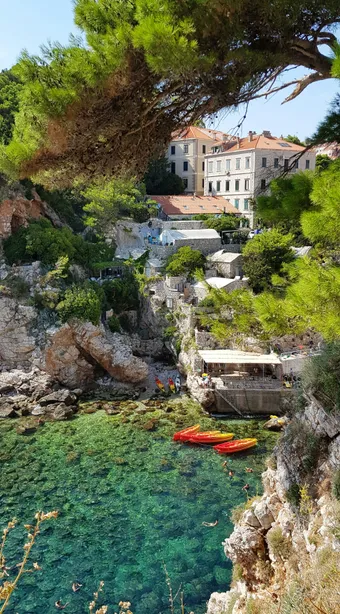
Photo by Cat Bassano on Unsplash
Kolorina beach in Dubrovnik: Kolorina Beach, nestled at the foot of Dubrovnik’s city walls, is an intimate cove with crystal-clear waters, framed by cliffs and Mediterranean pine trees. Located just steps from the Old Town, it is valued for its authentic atmosphere and unique views of the historic fortifications.
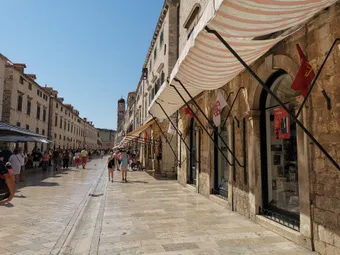
Photo by Z thomas on wikimedia
Stradun in Dubrovnik: The Stradun, the main thoroughfare of Dubrovnik’s Old Town, links the Pile and Ploče gates along a beautifully polished stone street. Lined with palaces and Baroque buildings, this iconic avenue is the historic, cultural, and social heart of the city.