
Ancient Routes of the Middle East in Jordan and Lebanon
Last update: January 7, 2026
Scholarly and responsible circuit linking desert caravan trails in Jordan to Phoenician Mediterranean ports in Lebanon. The itinerary follows the historical logic of ancient trade axes, offering safe and practical visits with an even time split between Jordan and Lebanon.
Jordan: Amman, Madaba, Kerak, Petra, Wadi Rum
Lebanon: Beirut, Byblos, Baalbek, Anjar, Bekaa Valley, Sidon
Day 1 - Introductory day to locate Amman within ancient networks, with museums and Roman remains. This stop establishes the historical framework before following caravan routes south.
Amman Citadel (Jabal al-Qal'a)
Amman Citadel, Jabal al-Qal'a, Amman, Amman, Jordan
The Amman Citadel occupies a strategic hill in the heart of the city. The site reveals layers from the Bronze Age to Roman, Byzantine and Umayyad periods, showing continuity of communication routes in the region. Here one can observe how Amman, once Philadelphia, formed part of the Roman Decapolis and received goods moving along the King’s Highway. The remains of the Temple of Hercules testify to the Roman imprint, while Byzantine and Islamic structures show the religious and commercial transitions. From the heights, the topography helps explain the orientation of caravans and land routes. It is an ideal starting point to situate Petra and the caravan roads historically and geographically.
Plan for a transfer between Amman Citadel (Jabal al-Qal'a) and Roman Theatre and Amman old town. For this journey, the best type of transportation is : Car with driver. With this option, the estimated duration is : 00:10. Short transfer between the citadel and the old town. The driver can provide context on neighborhoods and historical topography.
Roman Theatre and Amman old town
Roman Theatre, Downtown Amman, Amman, Jordan
Amman's Roman theatre is a living example of Roman presence in Transjordan, built when the region was integrated into imperial trade. Facing the theatre, downtown streets preserve an urban pattern where markets and administrations succeeded each other across empires. Walking the souks and sampling local mezze, one senses the persistence of trade corridors that mixed local produce with long-distance caravan goods. Inscriptions and dressed stone reflect Nabataean and Roman influences, showing Amman as a stopover and administrative center. This place offers a concrete glimpse of daily exchanges that supported major ancient routes. The visit offers essential context before heading south toward Petra along ancient corridors.
Plan for a transfer between Roman Theatre and Amman old town and Jordan Museum and introduction to ancient routes. For this journey, the best type of transportation is : Car with driver. With this option, the estimated duration is : 00:15. Urban transfer. Allows comfortable arrival at the museum for the visit.
Jordan Museum and introduction to ancient routes
Jordan Museum, Al Hussein Public Parks, Amman, Amman, Jordan
The Jordan Museum provides a concise display of cultures crossing the region from Mesopotamia through the Islamic periods, including Nabataean and Roman eras. Collections show trade-related artefacts, like amphorae, jewellery and inscriptions, which testify to exchanges between desert, oasis and Mediterranean coast. The museum helps explain logistics and supply chains of caravans, from incense transport to ceramic exchanges. Models and historical maps aid visualization of routes, notably the King’s Highway and links from Petra to the ports. A guided visit here is a useful preparation before traveling south and visiting Nabataean sites. The museum is accessible and safe for visitors preparing their itinerary.
Plan for a transfer between Jordan Museum and introduction to ancient routes and Amman city center (accommodation). For this journey, the best type of transportation is : Car with driver. With this option, the estimated duration is : 00:15. Short transfer to the city hotel. Arrival in early evening for dinner and preparation for travel south.
At the end of the day, accommodation such as Boutique hotel or guesthouse located in Amman city center (Jabal Al Weibdeh or Downtown) is recommended. Staying in central Amman keeps you close to ancient sites and departure points to the south. These neighborhoods maintain an urban atmosphere suitable for cultural and culinary discovery.
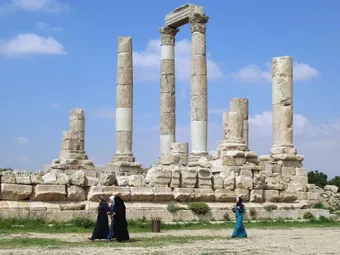
Photo by D-Stanley on flickr
Temple of Hercules in Jabal al-Qal'a - Citadelle d'Amman: Roman ruins with stone columns at an archaeological site, with visitors walking in the foreground.
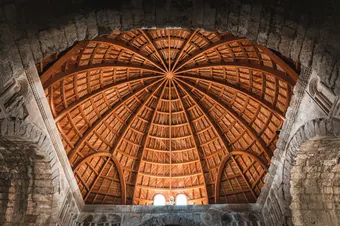
Photo by Abdullah Ghatasheh on Pexels
Wooden ceiling of the Umayyad Palace in the Amman Citadel: A stunning architectural detail of the wooden dome inside the Umayyad Palace, Amman, Jordan.
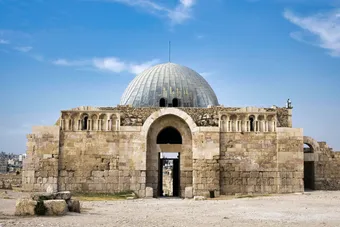
Photo by Hisham Zayadneh on Unsplash
Umayyad Palace in the Amman Citadel: Towering above the capital city of Amman on a hill is the Amman Citadel. This historic site comprises a 1700 meter wall that dates back to the Bronze Age, the iconic Temple of Hercules, and the Umayyad Palace. With so many significant landmarks located one site, the Amman Citadel is arguably one of the best places to visit in Amman.
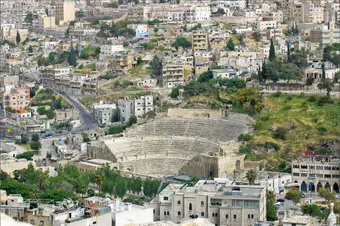
Photo by dalbera on flickr
Roman theater of Amman: The Roman Theatre and the lower city of Amman
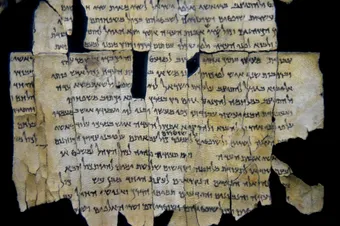
Photo by Osama Shukir Muhammed Amin FRCP(Glasg) on wikimedia
Part of Dead Sea Scroll 28a from Qumran Cave 1. The Jordan Museum, Amman: Part of Dead Sea Scroll 28a from Qumran Cave 1. The Jordan Museum, Amman
Day 2 - Day along the King’s Highway connecting Byzantine mosaics, medieval fortifications and arrival at Petra. Arrival in Wadi Musa sets up the next day’s intensive exploration of Nabataean urbanism.
Madaba and the Byzantine mosaic map
Saint George Church, Madaba, Madaba, Jordan
Madaba is renowned for its Byzantine mosaic map depicting Palestine and surrounding routes. The map bears witness to cartographic knowledge and communication ways used in Byzantine and Roman times to link cities and ports. In the context of ancient routes, Madaba shows how religious and administrative stops overlapped with trade corridors. The town acted as a relay for pilgrims and traders moving between northern Transjordan and the south. Mosaic workshops reveal exchanges of materials and artistic influence between regions. Visiting here gives a visual anchor before approaching southern sites.
Plan for a transfer between Madaba and the Byzantine mosaic map and Mount Nebo. For this journey, the best type of transportation is : Private car with driver. With this option, the estimated duration is : 00:10. Short transfer. Allows for a panoramic visit before the southbound drive.
Mount Nebo, panorama and memory of biblical routes
Mount Nebo, Mazar el-Nabi Musa site, Madaba Governorate, Madaba, Jordan
Mount Nebo provides a strategic view over the Jordan plain and the Jordan Valley, key points for understanding ancient itineraries. The site is associated with pilgrimage routes and population movements across Transjordan. Byzantine remains and mosaics on-site reflect how religious and commercial routes intersected. From this outlook, one can imagine caravans descending to the valley and joining routes toward Kerak and Petra. The visit is a contemplative pause that places upcoming movements in a geographic logic. The site remains accessible and safe for visitors accompanied by a local guide.
Plan for a transfer between Mount Nebo and Kerak Castle. For this journey, the best type of transportation is : Private car with driver. With this option, the estimated duration is : 01:45. Drive along the King’s Highway with scenic stops. The driver explains historical significance of the route.
Kerak Castle and continuity above the King’s Highway
Kerak Castle, Kerak, Kerak, Jordan
Kerak Castle demonstrates the strategic importance of passes controlling the King’s Highway, the major land axis linking the Levant to the Arabian peninsula. While largely medieval, the fortress commands passages used since antiquity for transporting goods and troops. The visit shows how successive empires exploited the same natural corridors to secure trade. Observing the panorama, one visualizes likely caravan routes moving toward Petra and coastal outlets. The site helps bridge medieval defensive strategies with the persistence of ancient ways. The route between Kerak and Petra still follows traces near natural passes and wadis essential for caravan halts.
Plan for a transfer between Jordan Museum and introduction to ancient routes and Madaba and the Byzantine mosaic map. For this journey, the best type of transportation is : Private car with driver. With this option, the estimated duration is : 00:35. Direct transfer to Madaba following sections of the King’s Highway. The driver can comment on historical relay points along the way.
Arrival at Petra and initial approach to the Nabataean site
Entrance to Petra Archaeological Site, Wadi Musa, Wadi Musa, Jordan
Arriving in Wadi Musa gives the first sense of the terrain that allowed the Nabataeans to control caravan routes. Petra grew as a hub between Arabia, Syria, Egypt and the Mediterranean, handling incense, spices and other luxury goods. The layout of cisterns, monumental tombs and façades demonstrates the city’s economic importance as a trade hub. Entering the site in the evening highlights the hydraulic works that enabled prolonged caravan stays. This arrival foreshadows the in-depth visit to come, which will examine Nabataean urbanism and commercial logic. Wadi Musa serves as a secure and comfortable base for exploring the site.
At the end of the day, accommodation such as Hotel or guesthouse near Petra entrance located in Wadi Musa (near Petra entrance) is recommended. Staying in Wadi Musa places you at earliest access to the site for morning visits and supports local hosting. The village atmosphere facilitates direct interactions with local guides and artisans.
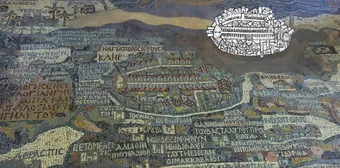
Photo by Egisto Sani on flickr
Madaba Map: The Holy City of Jerusalem in Byzantine Church of Saint-George: Madaba Map: The Holy City of Jerusalem
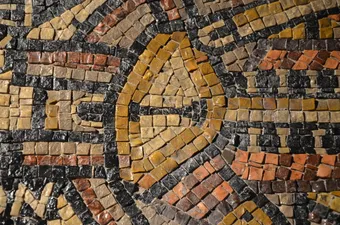
Photo by Following Hadrian on flickr
Reproduction of the Madaba Map showing the Damascus Gate, 6th century AD floor mosaic in the early Byzantine church of Saint George: Reproduction of the Madaba Map showing the Damascus Gate, 6th century AD floor mosaic in the early Byzantine church of Saint George at Madaba containing the oldest surviving original cartographic depiction of the Holy Land and especially Jerusalem
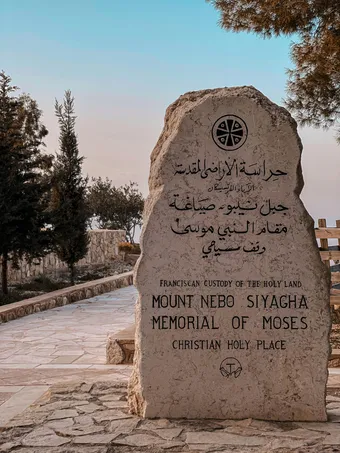
Photo by brokenadmiral_ on Pexels
Mount Nebo in Madaba Governorate: Stone memorial at Mount Nebo Siyagha, a Christian holy site in Madaba, Jordan.
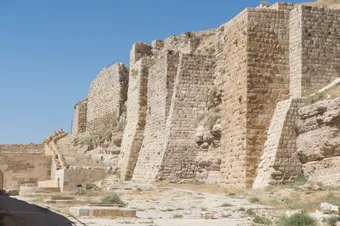
Photo by Dosseman on wikimedia
Kerak castle: Stone ramparts of a medieval fortress overlooking an arid landscape under a blue sky
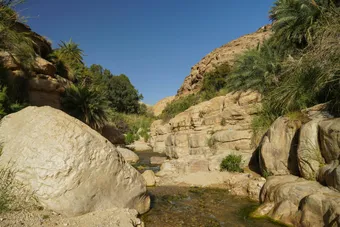
Photo by Leon Hellegers on Pexels
Picturesque Wadi landscape near Karak: Breathtaking rocky landscapes of Wadi in Karak, Jordan
Day 3 - Full day at Petra to study the Nabataean city and its role in long-distance trade. Guided visits and historical synthesis to connect architecture and economy.
The Siq and the Treasury (Al-Khazneh) at Petra
Main entrance of Petra site, Wadi Musa, Wadi Musa, Jordan
The Siq is the narrow gorge that channels visitors dramatically toward the Treasury, the site’s emblematic monument. These arrangements reveal Nabataean mastery of the landscape to control access and protect trade wealth. Al-Khazneh, a monumental façade, likely served as a tomb or sanctuary, attesting to the prosperity accumulated through caravan trade. Channels and cisterns on site highlight water management, essential for caravan halts in arid regions. Walking through these structures reveals the urban and ritual organisation of a city built around commerce. Morning visits allow study of architectural details before heat influences the pace of exploration.
Plan for a transfer between The Siq and the Treasury (Al-Khazneh) at Petra and Street of Facades and Royal Tombs. For this journey, the best type of transportation is : Guided walking transfer. With this option, the estimated duration is : 00:20. Short walks between monuments. The guide indicates phases of construction and uses.
Street of Facades and Royal Tombs
Central avenue and necropolis of Petra, Wadi Musa, Jordan
The Street of Facades and royal tombs show the funerary role of Nabataean elite, closely tied to merchant wealth. These monuments reveal how burial architecture expressed social status of those controlling trade in incense and spices. Sculpted façades display mixed iconography combining Arab, Hellenistic and eastern motifs, signaling broad contacts. Tomb locations on the heights demonstrate a desire for visibility and control over approaches. Studying these sequences clarifies how prestige was linked to mastery of trade networks. The visit places mechanisms of accumulation and redistribution at the heart of caravan route studies.
Plan for a transfer between Street of Facades and Royal Tombs and The Monastery (Ad-Deir) and panoramic walk. For this journey, the best type of transportation is : Guided walking transfer. With this option, the estimated duration is : 00:40. Ascent to the Monastery with scheduled stops. Several viewpoints are used for commentary.
The Monastery (Ad-Deir) and panoramic walk
Ad-Deir (Monastery), upper trail of Petra, Wadi Musa, Jordan
The Monastery, reached after an ascent, offers sweeping views over the valleys that once hosted caravan flows. Its scale recalls the symbolic and ritual importance tied to the city’s commercial success. The approach highlights the topography enabling surveillance of routes and control of halts. In addition to architecture, hydraulic features show the capacity to sustain urban life and moving caravans. The experience blends physical effort and historical immersion, illuminating relationships between landscape, economy and power. The afternoon affords reflection on the desert transition and the southern routes that connected to the Red Sea and interior Arabia.
Plan for a transfer between The Monastery (Ad-Deir) and panoramic walk and Wadi Musa, local information point. For this journey, the best type of transportation is : Walk and short transfer. With this option, the estimated duration is : 00:30. Descent and return to Wadi Musa for the synthesis meeting. Walk combined with a short drive if needed.
Historical commentary session on the trade route to the Mediterranean
This final session links Petra to the coastal ports that received caravan cargoes. The guide explains alternative itineraries, relay systems and the role of intermediaries in supply chains. Relations with Phoenician and Roman cities are discussed, and changes after Roman annexation are analyzed. The briefing is practical and aimed at consolidating observations before crossing to Lebanon. It takes place in an accessible setting adapted to visitors wishing to deepen the historical narrative. The session is useful to connect archaeological facts to ancient economic logic.
Plan for a transfer between Arrival at Petra and initial approach to the Nabataean site and The Siq and the Treasury (Al-Khazneh) at Petra. For this journey, the best type of transportation is : Guided walking transfer. With this option, the estimated duration is : 00:20. Approach on foot from the site entrance. The walk is a key sensory immersion into Nabataean topography.
At the end of the day, accommodation such as Local hotel or guesthouse located in Wadi Musa (near Petra) is recommended. Staying in Wadi Musa allows early access and supports local hosts. The village ambience facilitates exchanges with guides and artisans.
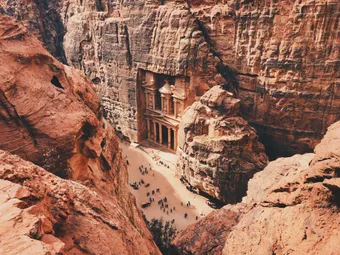
Photo by Alex Vasey on Unsplash
General view of Petra site: High-angle view of Petra’s Treasury carved into pink sandstone cliffs
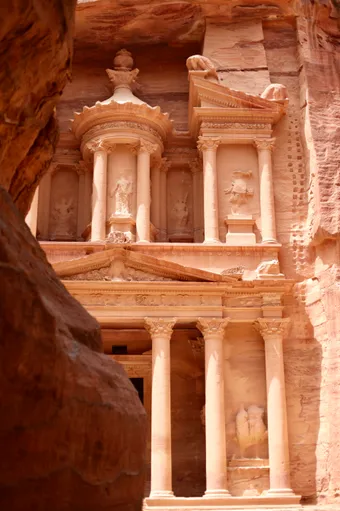
Photo by Julien Menichini on Unsplash
Iconic facade of Petra: Carved facade of Petra’s Treasury cut into pink sandstone rock
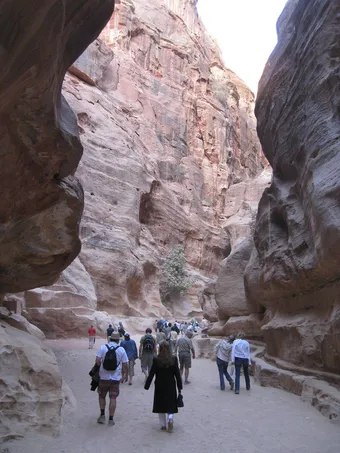
Photo by ChrisYunker on flickr
Petra's Siq: Visitors walking through Petra’s Siq, a narrow sandstone canyon with high rock walls
Day 4 - Desert exploration in Wadi Rum to study caravan landmarks and Bedouin knowledge. Return to Amman for overnight and flight preparation to Beirut.
Wadi Rum jeep safari and caravan waypoints
Wadi Rum Protected Area, Wadi Rum, Wadi Rum, Jordan
Wadi Rum's landscape preserves traces of routes used as corridors between oases and caravan cities. A jeep safari permits to explore tracks and natural landmarks that guided ancient caravans. Rock formations and Bedouin inscriptions show a continuity of use and orientation over millennia. The visit includes petroglyphs and natural watering points, underlining the importance of water for caravan logistics. The excursion is secure and adapted to travelers wishing to understand geography and mobility in antiquity.
Plan for a transfer between Wadi Musa (accommodation near Petra) and Wadi Rum Protected Area, Wadi Rum. For this journey, the best type of transportation is : Private car with driver. With this option, the estimated duration is : 01:45. Transfer towards Wadi Rum crossing desert scenery. The driver is experienced on these roads.
Cultural meeting with Bedouin families and traditional meal
Traditional Bedouin camp, Wadi Rum Protected Area, Wadi Rum, Jordan
Meeting Bedouin families allows hearing oral histories about routes and local trade practices passed down through generations. The meal highlights caravan-friendly cuisine which is simple, nourishing and suited to long travel stages. Conversations focus on stops, exchanges and how tribes organised the security of itineraries. The meeting also touches on Lawrence of Arabia and the modern mapping of certain tracks. This activity is organized with respect and responsible tourism principles to benefit local hosts. It complements landscape observations with human narratives about movement and exchange.
Plan for a transfer between Traditional Bedouin camp, Wadi Rum and Wadi Rum to Amman by road. For this journey, the best type of transportation is : Private car with driver. With this option, the estimated duration is : 04:00. Return along the national road to Amman. Includes brief stops for commentary on historical geography.
Return drive to Amman with commentary on route continuity
The drive back offers an opportunity to explain how modern road axes sometimes follow ancient corridors. The guide revisits the King’s Highway and alternative caravan routes toward the Mediterranean and the Red Sea. Stops allow observation of wadis and passes which were strategic control points for successive empires. The transfer is carried out in a private vehicle with an experienced driver. Arrival in Amman in the evening gives time to rest before the flight to Lebanon. This final leg places desert observations into a broader regional commerce perspective.
At the end of the day, accommodation such as Comfort hotel or boutique hotel located in Amman (central or upscale neighborhood) is recommended. Staying in Amman the night before the flight provides an early and convenient transfer to the airport. A central hotel eases final logistics and allows a reflective evening.
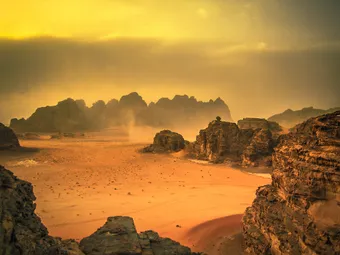
Photo by Drouyn on flickr
Wadi Rum: Wadi Rum valley
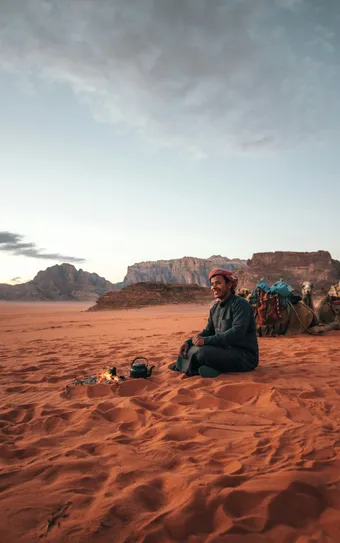
Photo by Spencer Davis on Unsplash
Wadi Rum desert: Bedouin’s in Wadi Rum
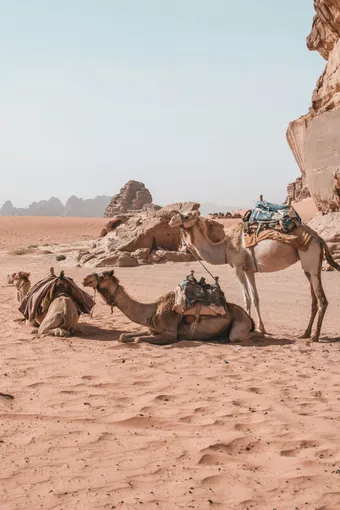
Photo by Alex Azabache on Pexels
The most effective way to travel in the desert: Camels resting in the sandy Wadi Rum desert, showcasing Jordan's arid beauty and outdoor adventure.
Day 5 - Airborne transfer to Lebanon and initial exploration of Beirut, the maritime hub of Phoenician exchanges. Museum visits and a city walk reposition the itinerary toward coastal networks.
Flight Amman - Beirut and arrival in Beirut
The regional flight provides a safe connection between Jordan and Lebanon without land crossing through sensitive areas. Arriving in Beirut introduces the Phoenician maritime sphere and Mediterranean commerce. A first walk along the Corniche and the downtown area helps sense the continuity of maritime flows that complemented inland routes. Museums and city collections testify to exchanges with Byblos and Tyre. This step resets the perspective from desert roads to maritime axes. Transfers are arranged with a professional local driver to ensure safety and comfort.
Plan for a transfer between Flight Amman - Beirut and arrival in Beirut and National Museum of Beirut and maritime history. For this journey, the best type of transportation is : Car with driver. With this option, the estimated duration is : 00:25. Short transfer to the museum. Driver provides practical details for the visit.
National Museum of Beirut and maritime history
National Museum of Beirut, Beirut Central District, Beirut, Lebanon
The National Museum assembles objects from prehistory to Roman times, showing Lebanon's role in Mediterranean networks. Phoenician collections, amphorae and inscriptions demonstrate how Lebanese ports were branches for distribution of maritime goods. Displays highlight glassmaking, navigation and the commercial logic of port cities. The visit assists understanding of the coastline's complementary role to the desert routes. Curators can also point to alternative itineraries to deepen Phoenician themes. It is a safe and informative starting point before coastal site visits.
Plan for a transfer between National Museum of Beirut and maritime history and Walk in downtown Beirut and the old port area. For this journey, the best type of transportation is : Walk and short transfer. With this option, the estimated duration is : 00:15. Simple move between the museum and the historic center. Time allowed for an introductory guided exploration of the city.
Walk in downtown Beirut and the old port area
Martyrs' Square and old port, Beirut Central District, Beirut, Lebanon
Beirut's core juxtaposes ancient remains and modern redevelopment, reflecting a long history of maritime commerce. The walk towards the old harbour shows the coast's role as an interface between inland areas and the sea. Alleyways bear witness to cultural exchanges from Phoenician to Roman and medieval periods. The stroll includes stops to explain distribution circuits that ferried imported goods into the hinterland. The guide highlights material and urban traces of this dynamic. The route is chosen among established, safe tourist circuits.
At the end of the day, accommodation such as City centre hotel or boutique hotel located in Beirut, central district or seaside neighbourhood is recommended. Staying in Beirut facilitates access to coastal sites and organizing excursions to Phoenician towns. Central lodging eases transfers and contact with local guides and curators.
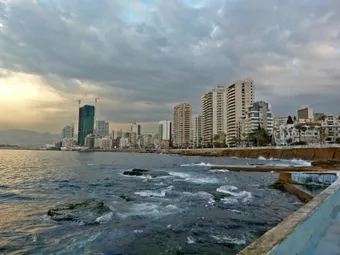
Photo by Wusel007 on wikimedia
Beirut Corniche from University tower: The Beirut Corniche, seen from the university tower, offers a stunning panoramic view of the Mediterranean Sea. This iconic seaside promenade highlights the contrast between the coastline, the Raouché cliffs, and the vibrant urban life of Beirut.
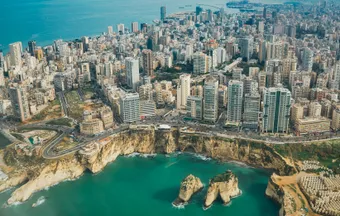
Photo by Piotr Chrobot on Unsplash
Aerial view of Beirut: Aerial view of Beirut along the Mediterranean coast, featuring the Corniche, coastal cliffs, and the Raouche Rocks
Day 6 - Day devoted to Byblos, the flagship Phoenician port, connecting coastal dynamics with inland tracks. Coastal transfer to observe the string of maritime hubs.
Byblos (Jbeil), Phoenician port and archaeological site
Byblos Old Port and Archaeological Site, Jbeil, Jbeil (Byblos), Lebanon
Byblos, one of the world’s oldest coastal cities, exemplifies Phoenician maritime expansion across the Mediterranean. The ancient harbour served as an embarkation point for cedar, glass and other commodities traded with Egypt and the Aegean. Archaeological layers show continuous occupation from the Early Bronze Age to Roman times, documenting maritime routes that complemented inland tracks. Walking the port and ruins, one sees how a modest bay became a pivotal commercial hub. The site allows understanding of synergies between offshore island networks and inland caravan routes supplying goods to the coast. Byblos is essential to connect the story of desert caravans with maritime Phoenician commerce.
Plan for a transfer between Beirut (accommodation) and Byblos Old Port and Archaeological Site, Jbeil. For this journey, the best type of transportation is : Car with driver. With this option, the estimated duration is : 00:45. Drive along the coast offering geographic landmarks and panoramic stops. The local driver provides context on ancient Phoenician navigation.
Byblos Castle and old souk
Byblos Castle, Jbeil Old Town, Jbeil (Byblos), Lebanon
The Crusader castle overlooks the ancient harbour and shows continuous strategic use of the site. The adjacent souk preserves traces of continuous commercial activity, with artisans and local trades. The juxtaposition of the ancient port and the medieval fortress makes visible successive eras serving control of exchange. Strolling the souk allows discussion of traditional products and how maritime circuits reshaped local economies. It is an opportunity to practice responsible purchasing from local craftsmen. The visit combines historical observation with cultural interaction in a secure context.
Plan for a transfer between Byblos Castle and old souk and Lebanese coastal road, Jbeil -> Tripoli or Beirut according to plan. For this journey, the best type of transportation is : Car with driver. With this option, the estimated duration is : 01:30. Continuation along the coast. The drive includes remarks on successive port sites and their complementarities.
Coastal drive towards Tripoli or return to Beirut with interpretive stops
The coastal road links Phoenician ports and makes visible the continuous alignment of cities that structured maritime commerce. The transfer includes commentary on export flows and port relays that complemented land-based caravans. Depending on time, the route may continue to Tripoli to visit another maritime hub. Stops are planned to explain the interface between harbour architecture and coastal geography. The vehicle is private, ensuring safety and flexibility to deepen the coastal system theme. This section helps conceive the Phoenician world as an integrated coastal system.
At the end of the day, accommodation such as Historic hotel or guesthouse in a coastal town located in Tripoli or Beirut depending on route and preference is recommended. Staying in a northern coastal town or returning to Beirut enables quick access to Phoenician sites and supports local port economies. This choice suits responsible travel emphasizing local hospitality.
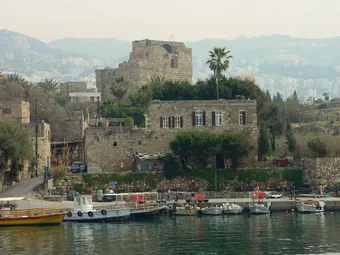
Photo by Serge Melki on flickr
Byblos Jbeil marina: The marina of Byblos (Jbeil) is a picturesque harbor lined with fishing boats and yachts, set below the historic old town. It offers a peaceful setting where the Mediterranean Sea meets one of the world’s oldest continuously inhabited cities.
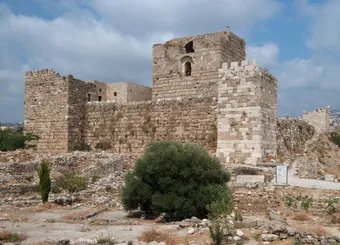
Photo by Peripitus on wikimedia
Byblos castle: The Byblos Castle overlooks the old town and harbor, offering panoramic views of the Mediterranean Sea. Built during the Crusader period, it reflects the many civilizations that shaped Byblos.
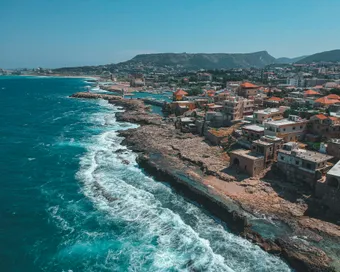
Photo by Emile on Unsplash
Lebanon’s coastline: The Lebanon features a stunning Mediterranean coastline, where rocky cliffs, natural coves, and historic towns follow one another. This narrow shoreline blends wild landscapes with vibrant urban areas, creating a striking contrast between sea and mountains.
Day 7 - Day in the Bekaa and Baalbek to observe Roman reconfiguration of routes and Umayyad relays. Agricultural stops link terroirs to historical commercial networks.
Baalbek, Roman temples and the legacy of imperial routes
Baalbek Archaeological Site, Baalbek, Baalbek, Lebanon
Baalbek's monumental Roman temples illustrate how networks were reorganized under imperial rule. The site functioned as a religious and economic center, reintegrating local routes into imperial logistics to facilitate movement of goods. Giant architectural dimensions reflect Rome's administrative and symbolic focus on certain nodal points. The visit clarifies how Roman infrastructure rationalised and secured land exchanges between the coast and inland. Nearby quarries and workshops show supply circuits for building materials, themselves linked to roads. Baalbek links Nabataean and Phoenician patterns to Roman structuring of the region's routes.
Plan for a transfer between Baalbek Archaeological Site, Baalbek and Anjar Archaeological Site, Anjar. For this journey, the best type of transportation is : Car with driver. With this option, the estimated duration is : 00:30. Short intra-valley drive. Allows observation of changing landscapes and historic routes.
Anjar, Umayyad city and steppe relay
Anjar Archaeological Site, Anjar, Anjar, Lebanon
Anjar exemplifies an Umayyad foundation controlling passages from the steppe to the Bekaa and the coast. Although later than classical antiquity, the site evidences continuity in the use of routes crossing the region. Urban remains, gates and markets recall the function of relays for caravans and travelers. Visiting Anjar shows how Islamic powers reused and adapted the organizational logic of trade and transit. Studying Anjar complements Baalbek's infrastructure reading and illuminates medieval reconfigurations of circuits. It is an accessible stop to broaden the narrative about movement across the Lebanese plateau.
Plan for a transfer between Anjar Archaeological Site, Anjar and Bekaa Valley, near Baalbek. For this journey, the best type of transportation is : Car with driver. With this option, the estimated duration is : 00:30. Transfer to a local producer for meeting and tasting. The journey is brief and secure.
Tasting and meeting in the Bekaa, observing local production
Bekaa Valley, near Baalbek, Bekaa Valley, Lebanon
The Bekaa has been and remains a key agricultural area supplying urban centers and ports since antiquity. A visit with a local producer shows the continuity of goods destined for regional trade, from cereals to viticulture. Conversations reveal how provisioning was organised to supply ports and cities. This stop highlights the importance of inland terroirs in the commercial chain. Tastings provide a sensory understanding of links between land and trade routes. The visit is arranged responsibly with established local producers.
At the end of the day, accommodation such as Hotel or guesthouse in the Bekaa or return to Beirut according to preference located in Baalbek or Beirut depending on pace and comfort needs is recommended. Staying in the Bekaa yields rural immersion, while returning to Beirut offers urban comfort for the final stage. Choice adapted to responsible travel and transfer logistics.
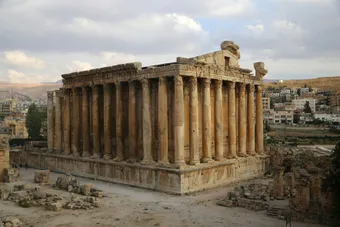
Photo by FERNANDO TRIVIÑO on Unsplash
Temple of Bacchus in Ballbeck: he Temple of Bacchus, located in Baalbek, is one of the best-preserved Roman temples in the world. Its massive columns and intricate stone carvings reflect the splendor of Roman architecture in ancient Lebanon.
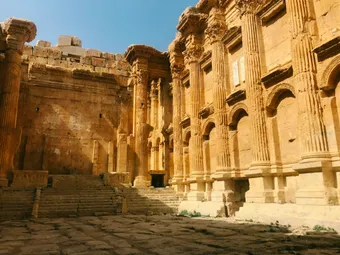
Photo by Fred Nassar on Unsplash
Temple of Bacchus in Ballbeck: The interior of the temple showcases monumental architecture with richly carved columns and impressive proportions. The decorated walls and natural light highlight the remarkable refinement of ancient Roman craftsmanship.
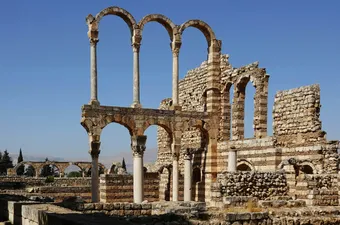
Photo by Tim Broadbent on Unsplash
Anjar archeological site: The archaeological site of Anjar features well-preserved Umayyad-era remains, including stone arches, columns, and walls. Listed as a UNESCO World Heritage Site, Anjar showcases early Islamic urban planning influenced by Roman and Byzantine traditions.
Day 8 - Final day visiting Phoenician ports and sanctuaries, then transfer to Beirut for departure. The circuit ends by linking seaside sites to the caravan routes explored earlier.
Sidon (Saida), Phoenician port and Sea Castle
Sidon Sea Castle and Old Souk, Sidon, Sidon, Lebanon
Sidon was a major Phoenician city active in navigation and glassmaking. The Sea Castle, built in medieval times, stands on an ancient port area and shows continuity of coastal use since Phoenician times. The souk and workshops reveal artisanal continuities and collections that document maritime exchanges. Visiting Sidon demonstrates how coastal ports served as interfaces between inland production and maritime networks. The tour is organized safely with private transport and a local guide to explain archaeological layers. The itinerary avoids sensitive zones and focuses on well-established visitor circuits.
Plan for a transfer between Sidon Sea Castle and Old Souk, Sidon and Eshmoun Temple, near Sidon. For this journey, the best type of transportation is : Car with driver. With this option, the estimated duration is : 00:20. Short transfer to the Eshmoun sanctuary. Move designed to facilitate access to archaeological sites.
Eshmoun sanctuary near Sidon
Eshmoun Temple, near Sidon, Sidon, Lebanon
The sanctuary of Eshmoun, devoted to a healing deity, is an example of a Phoenician cult site connected to the coastal urban network. The site demonstrates links between ritual practice, commerce and public health in coastal societies. Remains show phases of occupation that allow tracing cultural and commercial exchanges. Visiting the sanctuary helps explain how religious institutions structured social life in trading cities. It complements port visits by revealing cultic dimensions tied to the sea and commerce. The short transfer to the site is safe and provides a final contact with the Phoenician world.
Plan for a transfer between Eshmoun Temple, near Sidon and Sidon -> Beirut Airport or central Beirut. For this journey, the best type of transportation is : Car with driver. With this option, the estimated duration is : 00:45. Final transfer to Beirut for departure. Transfer organized for punctuality and safety.
Return to Beirut for international departure
Sidon -> Beirut Airport or central Beirut, Beirut (departure), Lebanon
Final transfer to Beirut for airport connections or onward travel. The journey is conducted in a private car with an experienced driver to ensure punctuality and security. It offers a last opportunity to summarise the itinerary tracing desert caravanways to Phoenician coasts. The transfer respects flight times and local regulations. Official end of the itinerary with no accommodation planned for the night. Assistance and optional transfer services can be recommended for onward journeys.
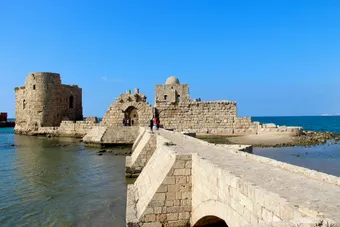
Photo by Nabih El Boustani on Unsplash
Sidon castle: The Sidon Sea Castle stands on a small rocky island off the Mediterranean coast, connected to the city by a stone causeway. Built by the Crusaders in the 13th century, it once defended the ancient harbor of Sidon.
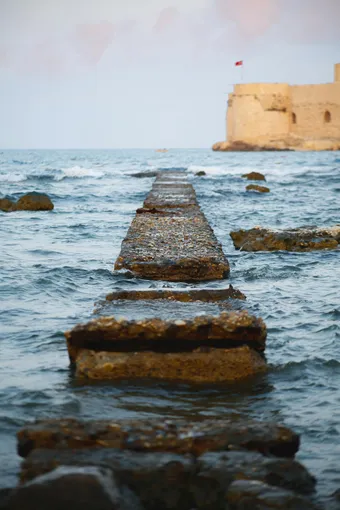
Photo by betül nur akyürek on Pexels
View from the sea of the Sidon castle: A stone jetty stretches out to a historic seaside castle under the bright sky.
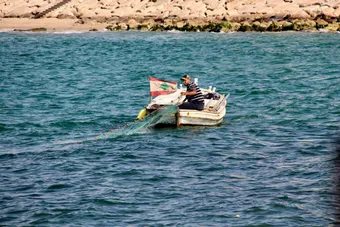
Photo by Nabih El Boustani on Unsplash
Lebanon mediterraneen sea: Fisherman in Saida, Lebanon