
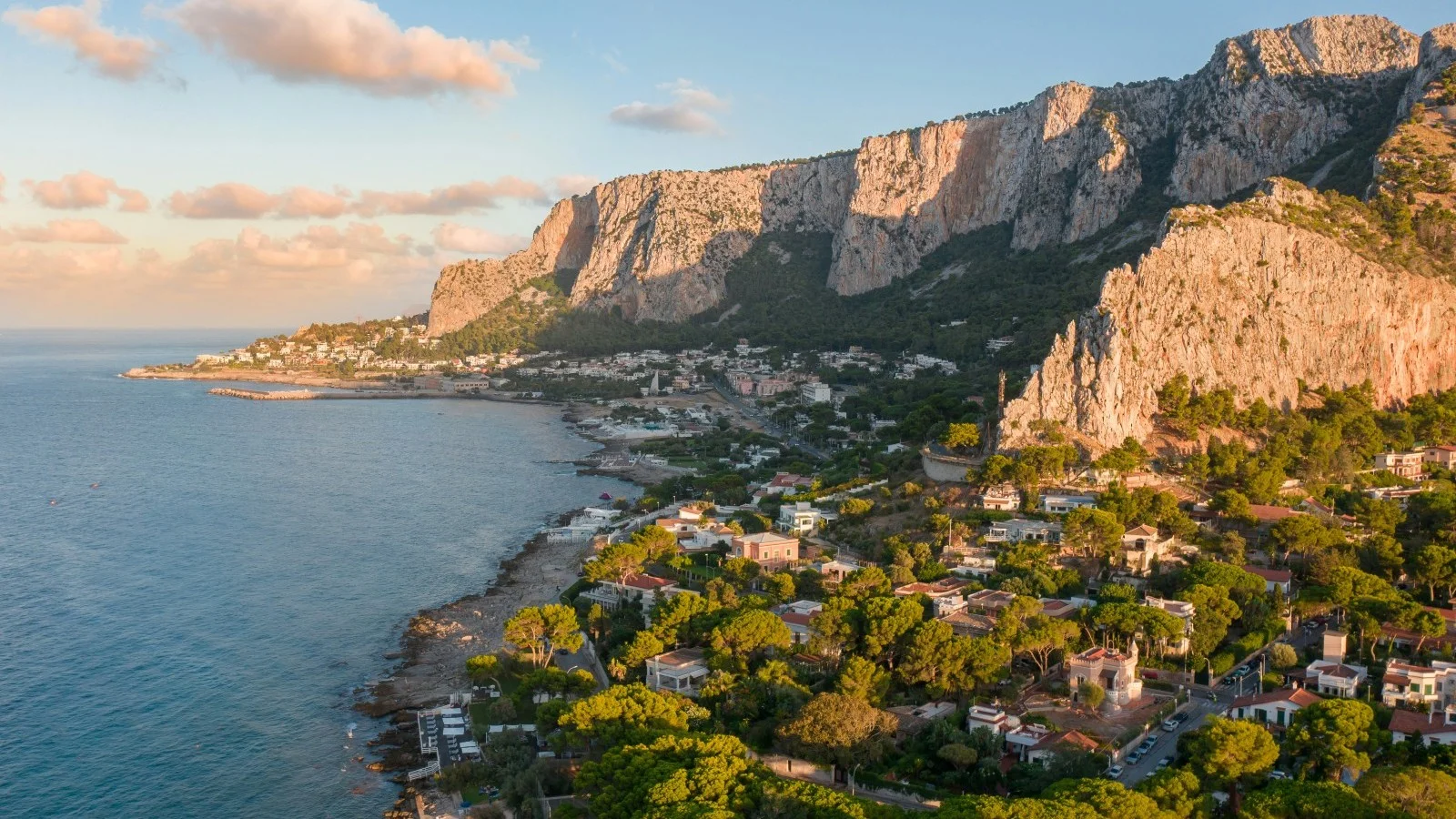
Sicily combines ancient ruins, baroque towns and active volcanoes in one compact island. This guide lists 10 essential destinations with cultural, historical and scientific highlights, plus practical info, prices, travel times and official links to plan your trip.
1. Palermo
Palermo is Sicily’s vibrant capital, blending Arab, Norman and Baroque influences. Highlights include the Cathedral, the Norman Palace and the Palatine Chapel with its Byzantine mosaics. Street markets such as Ballarò and Vucciria showcase local food culture. Museums like the Antonio Salinas Archaeological Museum reveal the island’s ancient past.
Practical information
- Prices: museums 5–12 €; Palatine Chapel guided visits 10–15 €.
- Transport: Falcone-Borsellino Airport (PMO) is about 35 km from the city center. Regional trains via Trenitalia. Buses and taxis available.
- Accommodation: budget rooms €40–80, mid-range €80–150, boutique hotels €150+ per night.
- Useful links: Visit Palermo official site https://www.visitpalermo.it/ and UNESCO listing for Arab-Norman Palermo https://whc.unesco.org/en/list/1487.
2. Cefalù
Cefalù is a medieval coastal town noted for its 12th-century Norman cathedral and sandy beach (approx. 2 km long). The old town’s alleys and the climb up the Rocca rock for panoramic views complement the Byzantine mosaics inside the cathedral. It is about 70 km east of Palermo.
Practical information
- Prices: cathedral and cloister entries 4–6 €; meals typically €15–35 per person.
- Transport: frequent trains from Palermo in 50–70 minutes via Trenitalia. Limited parking in high season.
- Accommodation: B&Bs €60–120, seafront hotels €120–220 in summer.
- Useful link: general regional info https://www.visitsicily.info/.
3. Monreale
Monreale is famed for its Norman cathedral covered in golden mosaics, one of Italy’s finest Byzantine treasures. The town sits on a hill 8 km from Palermo, offering sweeping views over the Conca d’Oro. The adjacent Benedictine cloister has 216 intricately carved columns.
Practical information
- Prices: cathedral and cloister entry 6–10 €.
- Transport: bus or car from Palermo in 20–30 minutes. Limited on-site parking.
- Accommodation: many visitors stay in Palermo and visit Monreale as a day trip; local stays €60–130.
- Useful link: UNESCO listing https://whc.unesco.org/en/list/1487.
4. Valley of the Temples (Agrigento)
The Valley of the Temples is an outstanding archaeological zone with well-preserved Doric Greek temples from the 5th century BC. The Temple of Concordia and sunset views are unforgettable. The archaeological park spans several kilometers and is essential for archaeology lovers.
Practical information
- Prices: archaeological park ticket €10–12; guided tours €50–120 depending on length.
- Transport: Agrigento to Palermo ~130 km, about 2 hours by car; regional buses available.
- Accommodation: Agrigento hotels €50–120, agritourisms €70–150 nearby.
- Useful links: official park https://www.parcodeitempli.net/ and UNESCO https://whc.unesco.org/en/list/831.
5. Syracuse and Ortigia
Syracuse blends Greek ruins, Baroque architecture and the compact isla of Ortigia. The Neapolis Greek Theatre (3rd century BC) and the Ear of Dionysius are major attractions. Ortigia’s cathedral, built on a Greek temple, and its baroque squares create a timeless atmosphere.
Practical information
- Prices: Neapolis park ticket €10–15; museums €4–8.
- Transport: Catania → Syracuse ~65 km, about 1 hour by car or train; Catania Airport info https://www.aeroportocatania.it/en/.
- Accommodation: Ortigia hotels €80–200 per night.
- Useful links: UNESCO listing https://whc.unesco.org/en/list/1200 and regional info https://www.visitsicily.info/.
6. Mount Etna (Etna Park)
Mount Etna is Europe’s largest active volcano and a UNESCO site, offering hiking, volcanic observatories and 4x4 excursions. The volcanic landscapes, recent lava flows and surrounding vineyards producing Etna DOC wines make it a geological and gastronomic highlight.
Practical information
- Prices: guided tours €40–120; cable cars and lifts variable €25–80.
- Transport: 33 km from Catania, typically 35–60 minutes depending on the Etna access point.
- Accommodation: stays in Catania or local lodges €50–160; mountain refuges and agrotourisms nearby.
- Useful links: UNESCO https://whc.unesco.org/en/list/1208 and local visitor resources https://www.visitsicily.info/.
7. Taormina
Taormina is famous for its cliffside Greek theatre with views over the Ionian Sea and Mount Etna, elegant pedestrian streets and the picturesque Isola Bella beach. The Teatro Greco still hosts concerts and events, making it a living cultural site.
Practical information
- Prices: Teatro Greco ticket €10–15; funicular about €2–6 round trip.
- Transport: Taormina to Catania ~55 km, around 50–60 minutes by car; regular trains and buses.
- Accommodation: boutique hotels €120–300 per night in high season.
- Useful links: Taormina tourism https://www.taormina.it/.
8. Noto
Noto is a masterpiece of late Baroque architecture, part of the Val di Noto UNESCO ensemble. Its honey-colored facades and ornate palaces were rebuilt after the 1693 earthquake, creating a coherent urban baroque landscape often admired at sunset.
Practical information
- Prices: museums and cathedral €3–8; guided walks €10–40.
- Transport: Noto to Syracuse ~32 km, about 30–40 minutes by car; regular regional buses.
- Accommodation: rooms €60–140; many trulli-style B&Bs and small relais.
- Useful link: UNESCO Val di Noto https://whc.unesco.org/en/list/1024.
9. Villa Romana del Casale (Piazza Armerina)
Villa Romana del Casale houses some of the best preserved Roman mosaics from the 4th century AD, with vivid scenes of hunting, athletics and daily life. The mosaics are an invaluable record of late Roman art and society.
Practical information
- Prices: entry and audio guide €8–12; on-site parking available.
- Transport: Piazza Armerina to Enna ~40 km; 1–2 hours by car from Agrigento or Catania.
- Accommodation: local guesthouses €50–100; combined agritourism packages often available.
- Useful links: UNESCO listing https://whc.unesco.org/en/list/832 and official cultural ministry info.
10. Aeolian Islands (Lipari, Stromboli, Vulcano and others)
The Aeolian Islands are a volcanic archipelago and UNESCO site, offering thermal baths, volcanic hikes and night-time views of Stromboli’s eruptions. Lipari features a rich archaeology museum and harbors, while Vulcano is known for mud baths and fumaroles.
Practical information
- Prices: ferry crossings €15–40 one way; guided volcano tours €40–100.
- Transport: ferries from Milazzo or Messina via Liberty Lines and SNAV.
- Accommodation: Lipari hotels €70–180, Stromboli simpler stays €60–150 depending on season.
- Useful link: UNESCO https://whc.unesco.org/en/list/908 and regional information https://www.visitsicily.info/.
Practical tips for visiting Sicily
- Best time to visit: May–June and September–October for mild weather and fewer crowds. July–August is hot and busy.
- Transport: renting a car gives the greatest flexibility. Trains cover main corridors, but rural sites often need a car. Book ferries and flights in advance in high season.
- Budget estimate for 10 days: €800–2,500 per person depending on travel style and season.
- Safety and health: be mindful of narrow streets and parking rules in historic centers. Carry some cash as small vendors may not accept cards.
Conclusion
Sicily packs extraordinary cultural, historical and natural variety into a single island. From Palermo’s markets and Cefalù’s beaches to Etna’s volcanic spectacle and the Aeolian islands, these 10 destinations form a varied and rewarding itinerary. Use the official links above to check schedules, book tickets and confirm opening times.
Sources and official links cited: UNESCO https://whc.unesco.org/, Visit Sicily https://www.visitsicily.info/, Trenitalia https://www.trenitalia.com/, Liberty Lines https://www.libertylines.it/, SNAV https://www.snav.it/en, Catania Airport https://www.aeroportocatania.it/en/, Parco dei Templi https://www.parcodeitempli.net/.